
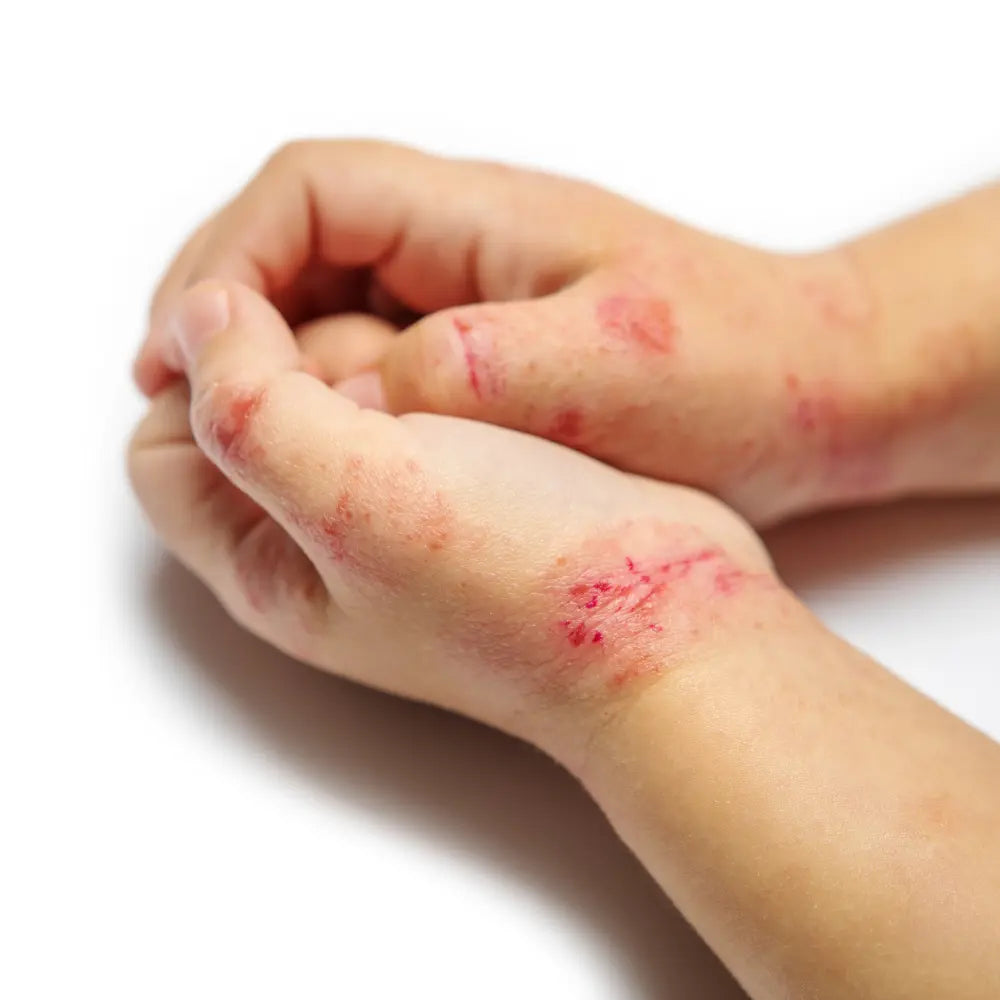
Eczema vs Dermatitis: What’s the Difference and How to Manage Both
If you’ve ever wondered whether eczema and dermatitis are the same thing, you’re not alone. These terms are often used interchangeably - by doctors, dermatologists and skincare brands alike - which can make things confusing when you’re just trying to understand what’s happening with your skin.
Here’s the short answer:
Eczema is a type of dermatitis but not all dermatitis is eczema.
In this guide, we’ll break down the difference between eczema and dermatitis, explore how they show up on the skin and share practical, skin-friendly ways to support both - especially if you’re dealing with dryness, itching or inflammation.
What Is Dermatitis?
Dermatitis is a broad medical term that simply means inflammation of the skin.
It’s not one condition - it’s an umbrella term that includes many different skin reactions, caused by things like:
+ Irritants
+ Allergens
+ Environmental factors
+ Microbial imbalances
+ Physical damage to the skin barrier
Dermatitis can be short-term or ongoing, mild or intense, depending on the cause.
What Is Eczema?
Eczema is a specific chronic form of dermatitis.
It often:
+ Starts in childhood
+ Runs in families
+ Is linked with allergies, asthma or hay fever
+ Flares and settles in cycles
Unlike some other forms of dermatitis, eczema isn’t just a surface reaction, it’s closely tied to genetics, immune response and skin barrier function.
Eczema vs Dermatitis: The Key Difference
To make this clearer, here’s a simple breakdown.

In short: all eczema is dermatitis, but not all dermatitis is eczema.
Do Eczema and Dermatitis Look the Same?
They can, which is why it’s often hard to tell the difference without proper assessment.
Shared Symptoms
Both eczema and other forms of dermatitis may involve:
+ Redness or inflammation
+ Itching (sometimes intense)
+ Dry, flaky or rough patches
+ Cracked, weepy or sensitive skin
+ Swelling or discomfort
Shared Triggers
Many triggers overlap, including:
+ Harsh soaps and detergents
+ Fragrance and preservatives
+ Hot or cold weather
+ Low humidity or excessive sweating
+ Stress (a big one!)
Chronic stress can disrupt the skin barrier and increase inflammation, which is why supporting the nervous system plays such an important role in managing eczema and other inflammatory skin conditions.
The pattern, location and persistence of symptoms often provide more clues than appearance alone.
Types of Eczema

Types of Dermatitis

How to Support Eczema and Dermatitis Naturally
No matter the type, one thing remains consistent: your skin barrier needs support.
Choose Gentle, Skin-Friendly Products
+ Use fragrance-free, pH-balanced skincare
+ Avoid harsh soaps that strip natural oils
+ Look for ingredients like ceramides, zinc, aloe vera or colloidal oatmeal
+ Consider a food diary if you suspect internal triggers
Moisturise - The Non-Negotiable When it Comes to Eczema Care
Moisturising isn’t optional for compromised skin. Barrier-supporting moisturisers designed for sensitive skin can help rebalance the skin over time. Keep in mind that a moisturising should be a daily routine when the skin is flaring as well as when it's settled and calm.
Apply at least twice daily, especially after bathing, to:
+ Lock in hydration
+ Reduce irritation
+ Strengthen the skin barrier
Avoid Long, Hot Showers
+ Stick to lukewarm water
+ Keep showers under 10 minutes
+ Add colloidal oatmeal to baths if skin feels irritated and look for this ingredient in your barrier care products.
Identify and Reduce Triggers
Triggers aren’t always obvious. For children especially, environmental changes like new routines, uniforms, increased outdoor time or frequent handwashing can quietly contribute to flare-ups - particularly during transitions like starting school.
+ Track flare patterns
+ Note products, fabrics, weather and stress levels
+ Make simple swaps where possible
Just remember that small changes often have the biggest impact.
Support Your Nervous System
Stress is a well-known flare trigger.
+ Gentle movement
+ Breathing exercises
+ Time outdoors
When to See a Dermatologist or Naturopath
You don’t need to manage everything alone.
Consider professional support if:
+ Skin is painful, crusted, or weeping
+ Over-the-counter care isn’t helping
+ Flare-ups are frequent or worsening
Qualified health professionals can identify the exact condition and guide treatment options tailored to your skin.
At Salvida, we believe in skin that feels good - not just skin that looks calm. That’s why our barrier-supporting formulas are designed for sensitive, eczema-prone skin, with a focus on long-term skin health and comfort.
FAQs
Read more

Eczema-friendly foods, common triggers, and a gentle approach to supporting skin health from the inside out.

If you’re dealing with sensitive or eczema-prone skin you’ve probably scrutinised every product in your skincare lineup.