

Hidden Household Irritants That Trigger Eczema Flare-Ups at Home
If you’re dealing with sensitive or eczema-prone skin, you’ve probably scrutinised every product in your skincare routine - and for good reason. Skincare often hides a number of potential irritants. What’s more easily overlooked are the hidden triggers inside our homes.
From laundry detergents to cleaning sprays and air fresheners, everyday household items can quietly undermine even the most gentle skincare routine, especially when eczema is confused with other forms of dermatitis that respond differently to irritants.
The good news?
By identifying these hidden irritants and making a few mindful swaps, you can significantly reduce flare-ups and create a more skin-friendly living space.
Common Household Irritants That Trigger Eczema
Even the gentlest skincare routine can’t compete with constant exposure to household irritants. These everyday items are some of the most common culprits.

Not everyone will react to all of these, but for eczema-prone or sensitive skin, reducing everyday exposure can significantly lower the background level of irritation.
How to Create a Skin-Friendly Home
Small, consistent changes can make a big difference. Here’s where to start.
Switch to Gentle Laundry Products
+ Choose fragrance-free detergents formulated for sensitive skin
+ Skip fabric softeners or use wool dryer balls
+ Run an extra rinse cycle to remove residue
Because fabrics sit against the skin all day, laundry choices matter more than most people realise.
Use Skin-Safe Cleaning Products
+ Opt for plant-based or hypoallergenic formulas
+ Wear gloves when cleaning to protect hands
+ Try simple DIY options like vinegar and baking soda
Reducing direct contact with harsh chemicals helps protect the skin barrier.
Reduce Airborne Irritants
+ Stick to unscented home and personal care products
+ Use natural fragrance alternatives, like simmering citrus peels
+ Patch-test essential oils before diffusing - they’re a common source of reactions
Less fragrance often equals calmer skin.
Reduce Dust Mites and Allergens
+ Vacuum with a HEPA filter
+ Wash bedding weekly in hot water
+ Use allergen-proof covers for pillows and mattresses
Lowering allergen exposure can help reduce persistent irritation and itch.
A Final Word on Home and Skin Health
Your home should support your skin - not work against it.
By reducing exposure to hidden household irritants, you create an environment where sensitive skin has a better chance to settle, repair, and thrive. Less irritation often means fewer flare-ups, better comfort, and more confidence day to day.
Small tweaks add up.
And for eczema and sensitive skin, those small changes matter.
FAQs
Read more
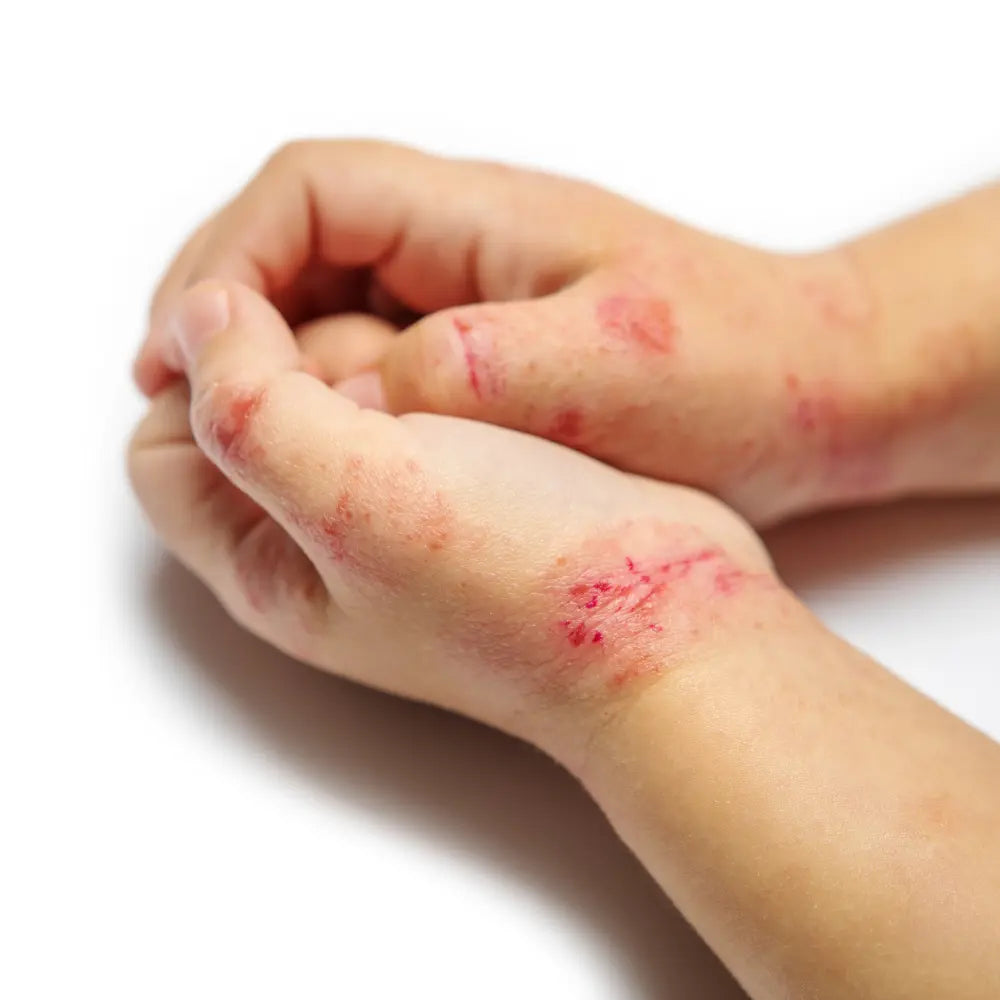
Confused about eczema vs dermatitis? Learn the difference, common triggers and how to support sensitive skin.

A simple guide to common irritants and how to build a calmer, skin-friendly routine.