The Invisible Burden of Eczema: Why It's Never Just a Rash
The short answer
Eczema is not "just a rash." Behind the redness and the itch sit sleepless nights, anxiety, stigma, kids missing school, careers that bend around flares, relationships that fray under the load and money that quietly disappears into creams and appointments. On 14 September, World Atopic Eczema Day asks the world to #BreakTheInvisibleBurden. Around 1 in 5 Australians will experience eczema at some point in their lives and more than 230 million people live with atopic eczema worldwide. If you live it, you are not imagining how heavy it feels. If you love someone who lives it, this is the piece to read before you say "have you tried moisturiser?"
Why I'm writing this now
I'm writing this because 14 September is World Atopic Eczema Day and the 2026 theme from the European Federation of Allergy and Airways Diseases Patients' Associations (EFA) and GlobalSkin is #BreakTheInvisibleBurden. Patient organisations around the world are using the day to say out loud what families like mine have been carrying for years: that atopic eczema reaches into sleep, school, work, money, confidence and relationships and that dismissing it as skin-deep leaves people alone with a load that is anything but.
I'm Jacqui. I founded Salvida after living through my daughter's severe flare when we were in Singapore and after watching the emotional side of eczema get ignored by cold, clinical brands that talked about skin as if it existed without a person attached. I'm a skin nerd, not a scientist. I partnered with formulators for the technical work. What I bring is the lived piece: the sleepless nights, the doctor loop, the mum load and the inbox full of people who sound exactly like I used to feel.
This article is awareness, not a shop. I'm lending a hand to the global day so sufferers feel less alone and so the people who "just don't get it" have something honest to read. If you want to forward one piece to a partner, a parent, a coworker or a friend, make it this one.
It started with my daughter in Singapore
When my daughter's eczema flared badly in Singapore, it did not look like a neat textbook picture. It looked like broken sleep for all of us, steroid creams and antibiotics cycling through the bathroom cupboard and a parade of doctors and dermatologists who were doing their best with what they had, while the emotional toll on the whole family kept growing in the background. You can address the visible flare in a clinic room. What nobody really prepared me for was the watching: watching a child scratch until the skin broke, watching confidence shrink when clothes or swimming or school photos suddenly felt unsafe, watching your own stress become another trigger sitting in the house.
Sleepless nights stack. One bad night is manageable. A week of them turns a household brittle. You start measuring the day by how many times you reapplied cream, whether the sheets were blood-specked again and whether you could get her to school without a meltdown over fabric or heat or the itch that arrives the minute she sits still. Partners carry it too, even when they are not the ones booking the appointments. Siblings learn to tip-toe. And the mum in the middle, which was me, starts living in a state of high alert that does not switch off when the skin looks quieter for a fortnight.
I got angry, in the useful way. The options in front of us felt like steroids, antibiotics or silence and the brands I could find either overpromised a fix they could not deliver or spoke as if eczema were a cosmetic inconvenience. Founding Salvida came out of that gap. I wanted something that took the emotional side seriously and stayed honest about what topicals can and cannot do. Naming that here matters because the origin of this awareness piece is the same origin as the brand: a family that lived the invisible burden before I had language for it.
If you are in that season now, you're not alone. I see versions of this story in my inbox every week.
The "just a rash" myth
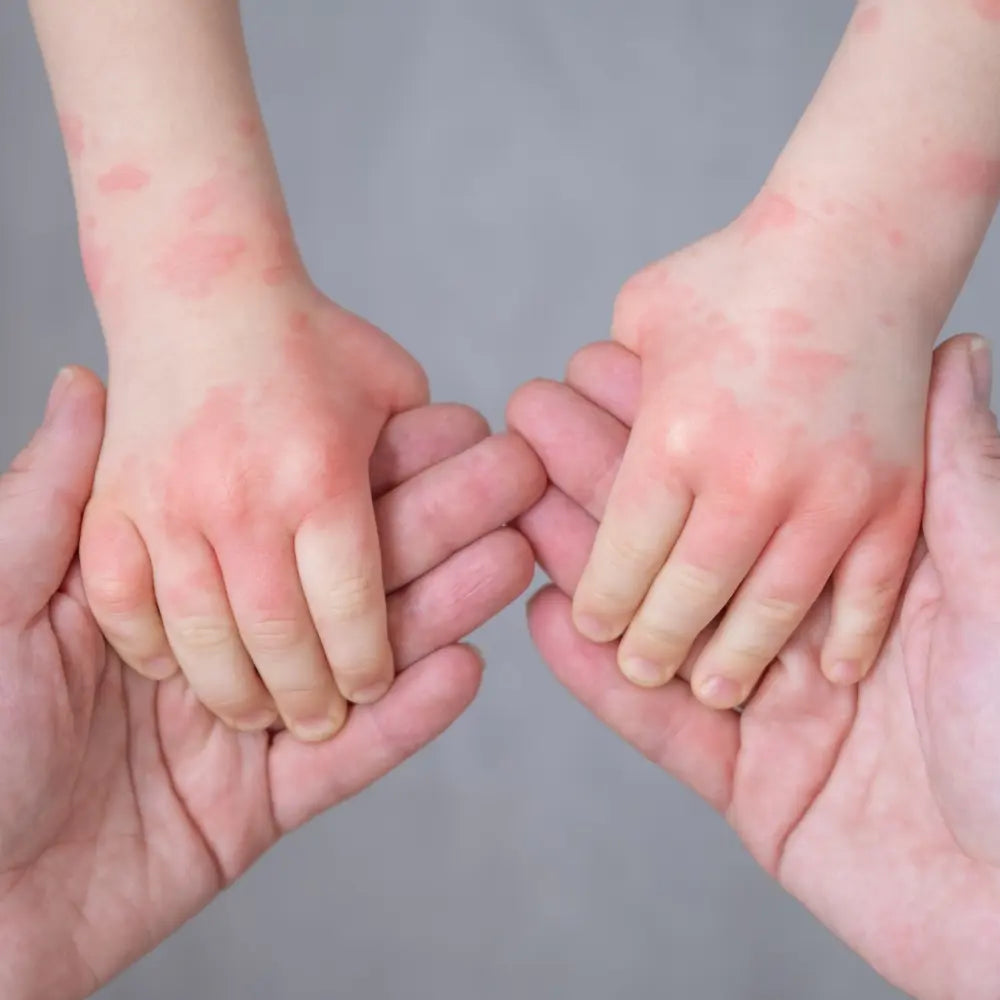
Society still leans on a lazy sentence: it's just a rash. That sentence is why people with eczema get told to toughen up, why caregivers get told they are overreacting and why workplaces and schools underestimate time off, concentration loss and the social withdrawal that follows a visible flare on the face, hands or eyelids.
The EFA and GlobalSkin World Atopic Eczema Day toolkit puts it plainly. Atopic eczema is a common, relapsing, chronic skin disease that can start in early childhood and evolve over a lifetime. The burden includes physical pain plus social, emotional and economic impact for patients and for the people who care for them. Understanding that whole spectrum is not optional soft talk. It is the difference between care that only chases redness and care that sees the person trying to sleep, work, parent and stay connected while their skin is on fire.
More than 230 million people live with atopic eczema worldwide. Many live with moderate-to-severe symptoms that go far beyond irritation. Chronic discomfort, visible inflammation, sleep disturbance, depression, anxiety and social withdrawal sit inside the same diagnosis that someone at a barbecue still waves away with "my cousin had that, they grew out of it." Some people do improve with age. Plenty do not. And even when the skin calms, the memory of being stared at, left out or not believed does not always leave with the flare.

What the invisible burden actually looks like
I want to walk the burden the way families live it and then put the proof points beside the story so this does not sound like one mum catastrophising in a blog. The figures below come mainly from the 2026 World Atopic Eczema Day Patient Organization Toolkit (EFA and GlobalSkin), which draws on European surveys, the Global Report on Atopic Dermatitis 2022 (GADA) and related burden research. Where a number is European or global, I will say so. Patterns still transfer to Australian households even when the study was not run on Aussie postcodes, because the nights, the stigma and the out-of-pocket receipts look painfully familiar here.
Sleep that never quite resets
More than half of people with moderate-to-severe atopic eczema experience disrupted sleep (GADA / toolkit global proof points). Among children, European burden work cited in the toolkit found that around 67% reported sleep disturbances in the past year, which then correlates with school performance and how fully a child can join in socially.
This is the 2am piece. Itching does not clock off because you have a meeting in the morning. Parents do not clock off either. Broken sleep makes everything else harder: patience, decision-making, the next day's flare and the quiet dread of another night like this one. When a coworker wonders why you look exhausted, this is often why.
Mental health, stigma and the courage to say it out loud
Atopic eczema has a significant psychological impact. Globally, about 1 in 6 people with the condition experience clinical depression and 1 in 8 report suicidal thoughts (GADA, via the toolkit). If that second number is landing close to home, please talk to someone you trust and in Australia you can call Lifeline on 13 11 14. You do not have to carry that alone and a blog post is not a substitute for real support.
In Europe, an EADV survey found that 48% of respondents with a skin condition reported being moderately or extremely anxious or depressed and about 15 to 20% reported feelings of stigmatisation. A separate study found that 67.1% of adult patients with childhood-onset atopic dermatitis reported feelings of stigmatisation such as teasing or bullying during childhood or adolescence (British Journal of Dermatology, 2024, cited in the toolkit).
Stigma is not abstract. It is the swimming carnival your teenager skips. It is the handshake you start avoiding when your hands are cracked. It is the well-meaning relative who asks if you have tried cutting out dairy again, as if you have not already lived through a decade of trial and error. Anxiety and low mood do not mean someone is "too sensitive." They are part of what a chronic, visible, itchy disease can do when the world keeps minimising it.
Kids, relationships and a life that gets smaller
Children and young people with atopic eczema carry a load that is easy for adults to underestimate because kids are supposed to be resilient. The toolkit names bullying, isolation, missed school days and feelings of shame as part of that burden, for them and for their families. Sleep loss feeds school absence and concentration problems. Visible flares feed teasing. And the child who learns early that their body is "the problem" can carry that story into adulthood long after a particular flare has settled.
I think about this as a mum first. You can pack the cotton layers and the spare cream and still not protect them from the social piece. Believing them when they say they do not want to go, without making them feel dramatic, is part of the care plan even when no cream is involved.
Globally, 39% of adults avoid social interactions because of their skin condition and over 50% report that their lifestyle is limited by atopic eczema (GADA / toolkit). In Europe, 45% of atopic eczema patients have their social life and leisure activities restricted by the disease (EFA, Itching for Life, 2018). That is how a condition becomes lonely. You say no to dinners because heat, fabric or the fear of being looked at is too much. Partners stop suggesting weekends away because the last three ended in a flare and a silent car ride home. Friends stop asking, not always from cruelty, sometimes from not knowing what to say. The disease shrinks the map of a life one cancelled plan at a time. Naming that is not attention-seeking. It is accuracy.

Work, school and the economic quiet bleed
Workforce impact shows up as sick leave, career limitations and in some cases job loss, with related sick leave averaging up to 12 weeks in the global proof points summarised by the toolkit. Out-of-pocket costs for moisturisers, specialised products and care that is not fully reimbursed create real barriers and they widen the gap between people who can afford to manage and people who cannot.
European figures make the money piece concrete. People with severe atopic eczema spent on average around €927 a year in extra healthcare expenses, with everyday necessities such as personal hygiene costing about 18% more per month than for healthy individuals (EFA burden work cited in the toolkit). Ninety-five percent of surveyed patients in that European work had out-of-pocket expenses related to the condition. One in four felt they could not cope well or keep the disease under control.
I will not invent neat Australian dollar figures here. What I will say is that Aussie families tell me the same story in different currency: private derm waits, scripts, creams that run out too fast, time off work and the mental maths of whether you can afford the next thing that might help. Financial stress sits on top of emotional pain. It is not a side issue.

The caregiver load nobody sees
There is a second invisible burden living in the same house and it belongs to the caregiver. Often that is a mum. Sometimes it is a dad, a partner, a grandparent or an adult child caring for a parent. The toolkit's campaign exists for patients and caregivers together, because the exhaustion is shared even when only one person's skin is flaring.
Caregiver load looks like becoming the household's unofficial dermatology nurse, sleep coach, appointment booker, laundry system and emotional buffer. It looks like Googling at midnight and then trying not to spiral. It looks like your own eczema, if you have it, flaring because stress is a trigger and you have not had a full night's sleep in months. It looks like guilt when you feel resentful and then more guilt for the guilt.
When I founded Salvida, the emotional side was not a marketing angle. It was the bit cold clinical brands kept missing. Skin does not live in isolation from the person washing sheets at 1am. If you are the caregiver reading this, your tiredness counts. Your need for belief and backup counts. World Atopic Eczema Day is for you too.
Why forwarding this matters
If you do not live with eczema, you can still be part of breaking the invisible burden. The most useful thing many sufferers ask for is not another product recommendation from someone who has never had to choose clothes based on seam placement. It is being believed.
Forwarding this article gives the people around you a shared language. It tells a partner why sleep is a medical issue in this house, not a discipline issue. It tells a manager why a flare week is not "a bit of dry skin." It tells a grandparent why commenting on a child's appearance in the school photo lands harder than they meant. It tells a friend that cancelling is sometimes survival, not flakiness.
Awareness is underrated because it does not look like a treatment. But stigma, isolation and the "just a rash" shrug are part of what makes the disease heavier. Taking those off someone's shoulders is real help.
When to get support and when it is more than skin
This piece is education and awareness, not medical advice and it is not a substitute for a GP, dermatologist or mental health professional.
See your GP or dermatologist if the skin is weeping, crusting yellow, smells off or comes with fever; if a flare is not settling despite consistent care and trigger management; if you are climbing steroid potency without a clear plan; or if a baby or young child's eczema is interfering with sleep or feeding. Ask about mental health support when anxiety, low mood, shame or exhaustion are taking over daily life. In Australia, Lifeline 13 11 14 is there if you need to talk urgently and your GP can help you find ongoing care.
You are allowed to ask for help with the skin and with the load around the skin. Both are legitimate.
In May 2025, WHO Member States adopted a World Health Assembly resolution recognising skin diseases as a global public health priority and warning against underestimating their burden. World Atopic Eczema Day 2026 sits in that moment on purpose. I am not going to turn this into a policy essay. I will say that when global health bodies finally name what families have known, it becomes a little easier to ask local systems, schools and workplaces to take eczema seriously too.
Further reading
- Eczema Association Australasia - Australasian patient charity with free information and community support.
- World Atopic Eczema Day - GlobalSkin - 14 September campaign hub and 2026 toolkit context.
- World Atopic Eczema Day - EFA - European patient federation page for #BreakTheInvisibleBurden.
- Global Report on Atopic Dermatitis 2022 (GADA / Global Atopic Dermatitis Atlas) - source for several global burden figures used above.
- EFA, Itching for Life: Quality of Life and Costs for People Living with Atopic Eczema in Europe (2018) - European quality-of-life and out-of-pocket findings referenced in the toolkit.
- World Atopic Eczema Day 2026 Patient Organization Toolkit (EFA and GlobalSkin) - campaign narrative and proof points for #BreakTheInvisibleBurden.
What I'd read next
If you are new here and want the practical trigger foundations, start with What Causes Eczema Flare-Ups: The 10 Triggers I Wish I'd Known About Sooner.
For the seasonal version of the household load, Winter Eczema: The Aussie Survival Guide walks through cold-weather flares the way Aussie families actually meet them.
If steroids and rebound confusion are part of your story, Eczema vs TSW: How to Tell the Difference is the educational cross-link I point people to when the history is complicated. It is information, not a diagnosis.
One last thing
If you have been told you are overreacting, you are not. If you have been managing someone else's disbelief on top of the itch, you deserve a quieter kind of company than that. World Atopic Eczema Day exists so the invisible burden gets said out loud, on purpose, by enough people that the "just a rash" story finally runs out of road.
You are not alone. Share this if it helps someone in your life be understood. That is the whole point of today.
Jacqui
Questions about this piece are welcome at jacqui@salvida.au.
FAQs
Read more

Finally, the weather has turned and your skin has made it through another winter. But then spring rolls around and, instead of your skin settling down, it suddenly becomes more sensitive, reactive ...
A skincare founder’s guide to psoriasis: symptoms, causes, how it differs from eczema and the peer-reviewed medical and natural options that calm it.