
Spring Eczema and Hay Fever: Why Pollen Season Makes Your Skin Flare (An Aussie Guide)
The short answer
Finally, the weather has turned and your skin has made it through another winter. But then spring rolls around and, instead of your skin settling down, it suddenly becomes more sensitive, reactive and flare-y. If pollen is a trigger for your skin, here’s the thing: it doesn’t just go up your nose. It lands on your skin, too. And when your skin barrier is already compromised, pollen can penetrate more easily and add fuel to an immune system that’s already on high alert.
In Australia, grass pollen is one of the main culprits and exposed skin is often the first to react. Think your face, eyelids, arms and hands. Which is why, if you know pollen is one of your triggers, reducing exposure in the first place can make a big difference. Because preventing a flare? A whole lot easier than trying to calm angry, reactive skin after the fact.
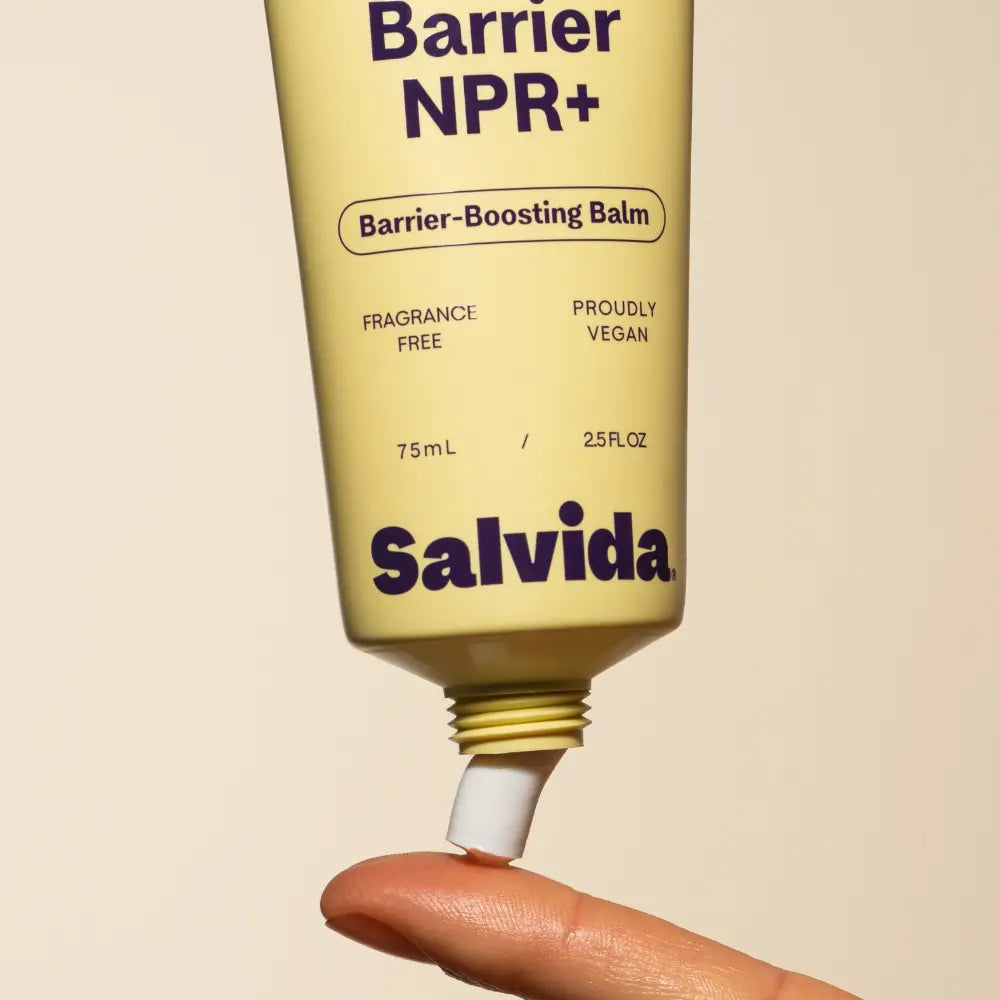
If you are already flaring, there are two things I would implement immediately. Rinse pollen off skin and clothes after being outdoors and use an occlusive barrier balm on your skin before going outside. Using it before exposure provides an invisible barrier between your skin and what triggers it. After all, preventing a flare is easier than calming one. If you're too late and your skin is already flaring, a zinc-rich barrier balm can also help calm it post exposure.
One more tip: don’t quietly ditch your winter skin routine just because September suddenly feels warmer. Your skin barrier doesn’t check the calendar. Consistency is key, no matter the season - so keep doing what’s working rather than waiting for a flare to remind you.

Why I'm writing this in September
It's the first week of September. Hello Spring! I wrote in Winter Eczema: The Aussie Survival Guide that September sees a reverse transition. Every environmental change is a shock your body has to adapt to. And that shock impacts your skin barrier too. Winter already asked it to hold water in and irritants out. Then the air changes. Windows open. Grass pollen arrives before the skin has had a chance to adapt to its new environment. And a lot of us let our winter skin routine 'relax', the very thing that was holding the barrier together, which invites a flare.
I'm Jacqui. I run Salvida, a brand I set up to help with moments exactly like these.
If you're new here, start with What Causes Eczema Flare-Ups: The 10 Triggers I Wish I'd Known About Sooner. Pollen is already on that list, but this article goes a little bit deeper into this environmental trigger.
Why some people's eczema flares in spring
Spring does not flare everyone. Plenty of us still itch more during the cold and dry winter months. Then there are those whose skin gets worse when the weather starts warming up. If this is you, you're not alone. On high-pollen days, itch rose 16% in the pollen-exposed group (Krämer 2005).
If your child's skin always turns in September, you are not imagining it. Of children with moderate eczema, 36% flared in pollen season. Of those, 70% also suffer from hay fever.
A Melbourne children's study found a greater chance of flaring after several high-pollen days, which matches what mums already see. Grass season can nudge a flare out into the open.
And don’t be fooled by the sunshine. More sun and warmer days don’t automatically mean happier skin. Spring might look friendly, but that doesn’t mean it’s being kind to a compromised skin barrier, especially when environmental triggers like pollen are suddenly back in the mix.
Pollen on the skin and up the nose
Hay fever is the nose. Eczema is the skin. In spring they are often the same pollen exhibiting in two different ways.
Dermatologists have shown this in the simplest way. Adults with eczema who already react to grass sat in a sealed room and breathed grass pollen. Their eczema got worse. Pollen can flare skin, not just the nose. You do not have to roll around on the oval. Breathing it in is enough.
Uncovered skin is affected more than covered skin. Face, arms, hands and eyelids are more often than not, exposed, so rinsing off, covering up and putting barrier balm on your most exposed areas is a great routine to get into.
You do not have to test positive to grass pollen as an allergen for this to matter. When the barrier is already broken, more pollen gets into the skin. A pollen grain is not an inert speck. As soon as it lands, especially once sweat or a damp barrier wets it, it starts leaking its own irritants, quite apart from the allergy protein. Those irritants can sting the outer skin and wake up nearby immune cells on their own, which makes a compromised barrier more reactive, which then allows more of the allergy protein to penetrate. The flare can keep building, sometimes silently, overnight. That is why a Saturday on the oval can still show up as Sunday morning eyelid irritation.
A negative allergy test does not mean pollen cannot flare your skin. The test is looking for one kind of allergy, and some people still flare when pollen sits on the skin, even if a blood test does not show a grass-pollen allergy.

Why hay fever and eczema travel together
Hay fever and eczema share a season because they often share a common trigger: pollen. Compromised skin lets allergens, like pollen, in. The same person ends up with itchy skin and an itchy nose (or eyes!) - both caused by exposure to the same trigger.
Filaggrin is a protein that helps the outer skin hold together (a fancy term for the mortar in the brick wall). When that mortar is weaker, eczema is more likely. The same weak mortar also makes hay fever more likely, especially if you already have eczema (van den Oord 2009). That is because compromised skin doesn't just leak moisture out. It also lets pollen and other allergens in. The immune system learns to overreact.
In Australia, eczema in infancy can contribute to hay fever later in life. About 30% of hay fever in children who also have asthma, and about 10% in children without, may be linked to eczema in the baby years.
This is not a small demographic. 23.9% of Australians reported hay fever in 2022. In the south-east, somewhere between 16% and 27% of children under six have current eczema. Spring is a double hit in the same households.
When grass actually hits in your city
Most of what you will Google is written for a northern hemisphere spring. Their trees, their months, their advice. Ours is grass, from September through summer, depending on the city. Timing shifts as you go north.
| City | When grass is usually worst |
|---|---|
| Melbourne | October to December, busiest from mid-October |
| Canberra | Grass October to December, with a smaller summer bump |
| Sydney | Spring, then a smaller summer bump |
| Brisbane | Several peaks through summer and autumn |
| Perth | Often earlier, around October |
| Hobart | From September |
If you live in Brisbane or further north, the subtropical grasses (Bahia and Bermuda) matter more than ryegrass. 16% of grass-allergic people reacted only to those grasses, not to ryegrass. A Melbourne ryegrass calendar will not tell you when your kid will flare. Your season runs later and longer.
People blame the wattle because they can see it, but tests rarely confirm it. I am not saying wattle cannot cause allergy. Grasses and cypress are the usual culprits. White Cypress Pine is the Australian native that produces highly allergenic pollen.
The same ryegrass can be dangerous for breathing in a spring storm. If hay fever comes with wheeze, see a GP and refer to National Asthma Council guidance.
What to do when you are already flaring
Lots of people only look for help once the skin is already red, itchy and angry, but that's leaving it too late in my opinion. Prevention is always better than treatment, but if a surprise flare does arise, here is what I'd do.
| What to do | Why it earns a place tonight |
|---|---|
| Apply Barrier NPR+ | It nourishes, protects and repairs compromised skin and is suitable for eczema-prone skin. Use it on its own at the first sight of any visible redness. |
| Rinse pollen off your skin and clothes after being outdoors | A great habit to get into. Clothes walk pollen into every corner of your house. |
| Dry the washing inside - bedding included | Clothes and sheets hung outside collect pollen, which you then place against your skin or sleep on. So when the pollen count is high, dry all your washing indoors. |
| Cover what you can. Shut windows on high-pollen days. Recirculate in the car. | All great ways to limit exposure to pollen if you know it's a environmental trigger for you. |
| Moisturise once the skin has calmed | Introduce a water-based moisturiser only when visible redness has settled. |
| Talk to a pharmacist or GP about hay fever | Antihistamines can help hay fever for some people. They won't do much for your eczema, unfortunately. For any medicine, ask a pharmacist, GP or dermatologist. |
And remember: if you know pollen is a trigger for your skin, reducing your exposure is always your best line of defence.
Because preventing a flare in the first place? A whole lot easier than trying to calm angry, reactive skin after the fact.

When to see a doctor
This piece is education, not medical advice. See a GP if the skin is weeping, crusting yellow or feverish; if a flare has not improved after seven to ten days of consistent barrier care; if you are climbing topical steroid potency without a plan; or if hay fever comes with wheeze, chest tightness or breathlessness after a spring storm. Thunderstorm asthma can hit people who have never been told they have asthma. That needs a GP, not a skincare routine. If your mouth itches with some fruits in pollen season, talk to your GP. Don't start a DIY diet.
Further reading (the guides that helped me figure this out)
ASCIA, Pollen Allergy - Australasian Society of Clinical Immunology and Allergy.
Eczema Association of Australasia - EAA.
Melbourne Pollen Count
National Asthma Council Australia, thunderstorm asthma
Household irritants and eczema
What I'd read next:
If you haven't already, start with What Causes Eczema Flare-Ups: The 10 Triggers I Wish I'd Known About Sooner. The seasonal bookend is Winter Eczema: The Aussie Survival Guide. What to Do When a Flare Hits is coming soon. Summer Eczema would complete the four-season set.
One last thing
Spring looks friendly after an Aussie winter. For a lot of eczema-prone skin, that warmth is not a free pass to drop the routine. Pollen still lands on you. Looking after the barrier is still the job. Winter dried it out. Spring puts grass on it, layered in sweat. Same leaky wall, different weather.
I made Salvida so I had products I could trust on my own family. If barrier-first, fragrance-free, clinically tested, steroid-free Aussie skincare is what you're after, I'd love you to try them. If you have any questions, reach out. I read every email and DM.
Jacqui, founder Salvida
FAQs
Read more
13 clever uses for a zinc and oatmeal barrier balm, from windburn and chafing to insect bites, chapped lips, cracked heels and more.
Eczema is not "just a rash." Behind the redness and the itch sit sleepless nights, anxiety, stigma, kids missing school, careers that bend around flares, relationships that fray under the load and ...