No Moisture Treatment (NMT) for TSW: What It Is and What to Expect
The short answer
No moisture treatment (NMT) is an approach some people choose during topical steroid withdrawal (TSW), where they stop using moisturisers and limit what goes on their skin, with some versions also cutting back on bathing. The idea is to let skin dry out and shed so it can learn to manage its own moisture again. Plenty of people in the TSW community say NMT helped them. As yet there are no controlled trials behind it, so research hasn't caught up with what many people report. Every person's skin is unique and what works for one person may not work for another. If you are considering NMT for TSW, it is a reasonable thing to explore, ideally with a practitioner who knows your history and can watch for infection.
Why I'm writing this
I'm Jacqui. I run Salvida, an Aussie skincare brand for sensitive and eczema-prone skin, built on my own eczema history and years of watching my daughter go through severe eczema. I am a skin nerd, not a doctor.
NMT comes up in my inbox more than almost anything else to do with TSW. People often ask a sharp question that deserves a straight answer: why would a skincare founder write about a method that means using less skincare? Part of the answer is that Barrier NPR+ actually has a place in a modified NMT routine, which I'll explain properly further down.
The bigger reason is that pretending NMT doesn't exist, when so many people say it has worked for them, would be dishonest. So would pretending it's already proven. I'd rather give you the clearest picture I can, so whatever you decide, you decide with your eyes open. If you are newer to TSW itself, my guide Eczema or Topical Steroid Withdrawal? How to Tell the Difference and Find Real Support is a good place to start.

What is no moisture treatment (NMT)?
NMT is a moisture-restriction approach used by some people during topical steroid withdrawal. It is associated with the Japanese dermatologist Dr Kenji Sato, who has treated TSW patients in Osaka for decades. He is a co-author of a 2014 peer-reviewed paper describing topical steroid addiction in atopic dermatitis, written from the authors' experience of treating many patients rather than from a formal trial. In its strictest form NMT typically means stopping topical steroids and moisturisers altogether and applying nothing to the skin.
Some versions also limit showers and baths and a few restrict how much people drink. I want to be really clear about that last part. Restricting fluids can be risky, especially when large areas of skin are open or oozing, in hot weather or for children and older people. If a protocol you are reading about includes it, please talk it through with a health practitioner you trust before you change anything.
Most people I hear from land somewhere in between, which is often called modified NMT. I'll come back to that.
Why do people with TSW try NMT?
A lot of people reach NMT after moisturising stops feeling like help, because TSW skin can become extraordinarily reactive. Creams that once felt soothing may suddenly sting, burn, feel hot or leave skin feeling wetter, stickier and more uncomfortable. The International Topical Steroid Awareness Network (ITSAN) lists hypersensitivity of the skin to water, movement, moisturiser, fabrics and temperature among the common symptoms after stopping topical steroids. In its coping guide it also notes that some people cannot tolerate any moisturiser during withdrawal, especially at certain stages. So if that has happened to you, you are not imagining it.
Oozing is the other big driver. When skin is weeping, more wet product on top can feel like the opposite of what it needs.
Then there is the thinking behind NMT. Within the community you'll often hear that skin can come to rely on external moisture, that constant moisturising stops it producing its own or that drying out helps the shedding phase move along. I understand why that resonates, because it mirrors what many people went through with steroids. NMT is still a relatively new approach in research terms. The ideas behind it come from practitioners who have worked closely with TSW patients and from thousands of people sharing what they've lived through. The formal evidence is building but hasn't been validated or established in trials as yet.
What does the research actually say about NMT?
TSW itself is very real and for the majority of those suffering, excruciating. If you are living it, you don't need a journal to tell you that, but the science is moving your way. A 2015 systematic review in the Journal of the American Academy of Dermatology by Hajar and colleagues, working with the US National Eczema Association, concluded that topical steroid withdrawal is likely a distinct adverse effect of topical steroids. Hwang and Lio updated that review in 2022 and called for more research into how best to support people through it. In 2025 researchers linked to the US National Institutes of Health published work describing TSW as biologically distinct from eczema, involving an excess of a compound called NAD+ in the skin.
Research on NMT is at an earlier stage. The 2014 paper co-authored by Dr Sato describes TSW in detail from the experience of clinicians who treated many cases, which is valuable practitioner knowledge, though it isn't a trial and doesn't set out NMT as a tested protocol. The original NMT work was presented in Japanese in the mid-1990s.
Where NMT does appear in peer-reviewed journals, it's as something people with TSW are actively choosing. A 2022 BMJ Open study in Singapore described "no moisture therapy" as an approach some patients advocated. A 2023 UK case series of 19 people with TSW in Clinical and Experimental Dermatology found that three were using no moisture regimens.
So the evidence for NMT right now is emerging, community and practitioner driven evidence. It hasn't yet been clinically validated through a large-scale trial or anything similar, which is a gap in the research, not a judgement on anyone's experience. Until those studies happen, the National Eczema Association will keep including moisturising as supportive care. ITSAN's own advice in its coping guide is more flexible: if moisturiser makes your skin feel better, apply it to those areas. If it doesn't help or makes you itchier, stop. That leaves room for NMT as a choice people make for their own skin.
NMT vs moisturising during TSW
Think of these less as camps and more as a spectrum, with strict NMT at one end, regular moisturising at the other and lots of personal decisions in between. Let your skin's response, your comfort and a practitioner you trust guide you, rather than loyalty to a method. If NMT makes you feel worse, stopping it is not failure. If moisturising stings every time, pausing it is not failure either.
What to expect during NMT
Everything here is what people commonly report, not a clinical timeline. TSW itself moves in cycles, so it's hard to tell what is NMT and what is the withdrawal running its course.
| What people often describe | What it can look and feel like | Worth knowing |
|---|---|---|
| Early days | Tightness, dryness, a pulling feeling when you move, sometimes less sting than with creams | Many people say this is the hardest mental hurdle |
| Drying and cracking | Skin may crack at joints, hands, neck and around the mouth, sometimes painfully | Deep or bleeding cracks are a reason to get them looked at |
| Crusting | Oozing areas may dry into crusts | Golden or honey-coloured crusts can signal infection |
| Flaking and shedding | Heavy flaking, often in cycles | ITSAN describes TSW skin cycling between oozing, swelling, burning and flaking |
| Settling | Many people report less oozing and more comfortable skin over time | Timing varies from weeks to many months and flares can return |
For support from people who have been exactly where you are, the International Topical Steroid Awareness Network (ITSAN) is the global organisation I point people to first. It offers awareness, advocacy and a support community for people who have felt unheard elsewhere. Its coping guide describes flares followed by breaks, where skin that oozed during a flare becomes dry, flaky and tight like plastic, a cycle that usually repeats many times before full recovery. ITSAN is honest that there's no clear timeline yet. Most people experience vast improvement within 12 to 24 months, while some take longer or shorter. So far no medication or method has been proven to speed things up. That uncertainty is part of why lived experience shared through communities like ITSAN matters so much.
Is NMT safe? The risks worth taking seriously
NMT is not risk-free. Dry, cracked skin can be very painful on hands and joints that move all day. Cracks are openings in a barrier that is already vulnerable to infection.
Please get medical help promptly if you notice:
- weeping with yellow or honey-coloured crusts (ITSAN notes dried ooze can look like a crust and asks people to have a doctor tell it apart from infections such as staph or impetigo)
- pain, warmth, redness or swelling that is spreading or getting worse
- fever, chills or feeling generally unwell
- a sudden deterioration that doesn't feel like your usual pattern
Clusters of painful, punched-out sores or blisters, especially with fever, can be a sign of eczema herpeticum, a herpes virus infection of eczema-prone skin. DermNet, a dermatologist-written reference from New Zealand, describes this as one of the few dermatological emergencies, so see a GP the same day or go to an emergency department.
Large areas of raw or oozing skin can also affect how your body manages fluid and temperature. ITSAN lists altered thermoregulation as a common TSW symptom and notes chills can also come from infection or adrenal suppression, which is why it recommends lab work to rule those out. Feeling dizzy, very thirsty, unusually cold or hot or passing much less urine are reasons to get medical help.
Mental health matters too. ITSAN lists depression and anxiety among the common symptoms of TSW and its coping guide suggests speaking with a counsellor immediately if you feel depressed or suicidal. If itch and pain are stealing your sleep or your mood is sliding somewhere dark, that is just as urgent as your skin. In Australia you can call Lifeline on 13 11 14 any time.
Children need hands-on support from a qualified practitioner for TSW and for any change to their skincare routine, full stop.
I also know many people in this community have felt dismissed or let down by the medical system. That hurts. If that's you, it isn't a reason to go it alone. It's a reason to keep looking for a TSW-aware practitioner, whether that's a GP, a dermatologist or an integrative practitioner, who listens and works with you on any change to your medication. ITSAN itself recommends finding a supportive doctor and working with them on a plan before stopping topical steroids, because long-term use on large areas can cause adrenal suppression and stopping suddenly in that situation can be dangerous. ITSAN and moderated TSW groups can be a good place to ask who people trust in your area.
What is modified NMT?
Modified NMT is the umbrella term people use for a gentler version. There's no single definition, but in the TSW community it usually means some combination of:
- avoiding water-based lotions and creams while keeping a minimal protective layer on the most painful spots
- shorter, cooler showers or fewer of them, which ITSAN notes some people find leaves them less itchy
- patting skin dry rather than rubbing
- loose, soft cotton clothing to cut down friction
- ice packs, cool baths or a cold washcloth for itch and burning, which ITSAN's coping guide suggests
- choosing water-free balms or ointments with simple ingredients, which ITSAN says most people find more comfortable than creams or lotions
Making something more bearable is not the same as doing it wrong.
How Barrier NPR+ fits into modified NMT
Barrier NPR+ is not strict NMT. Strict NMT means applying nothing to your skin, so if that's your plan, Barrier NPR+ doesn't fit in there.
Where it does belong is the space in between. That's exactly the space I made it for. Hydration and barrier support are not the same thing. Hydration adds or attracts water. Barrier support helps protect vulnerable skin. Barrier NPR+ was intentionally created to do the second job.
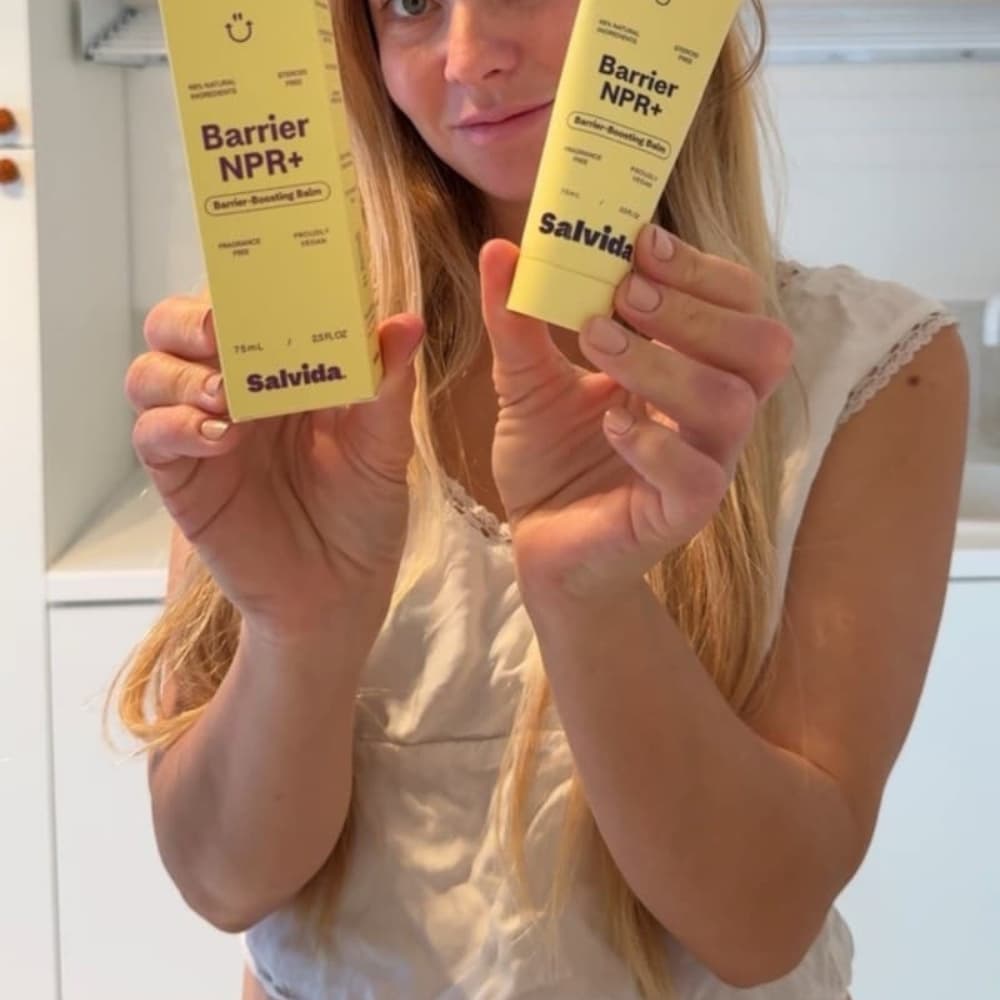
It's a water-free, zinc-rich balm with 15% non-nano zinc oxide, colloidal oatmeal, castor oil and ceramide NP. There's no water, no fragrance, no steroids, no essential oils and no drying alcohols. Because it's water-free, it doesn't need preservatives. It was dermatologist tested and achieved an irritation score of zero, even on sensitive skin. In a 2024 independent instrumental study by Eurofins, it showed no statistically significant change in skin hydration levels after application. Instead it forms a physical layer that helps shield vulnerable skin, soften dry flakes and relieve discomfort associated with dry, itchy skin.
That's why some people following a modified or flexible NMT approach choose Barrier NPR+ for comfort on cracked or especially raw spots. Whether that suits you is a personal call best made with a practitioner you trust. Patch test first. ITSAN's advice is to spot test everything and try one new thing at a time, because TSW skin can accept a product for a while and then react to it at another stage. And if a weepy area looks infected, a balm is not the answer. Medical help is.

Further reading
These helped me figure this out. I'm a founder and an eczema mum, not a clinician, so treat the links as reading rather than personal medical advice.
- ITSAN: the International Topical Steroid Awareness Network, a global organisation for TSW awareness, advocacy and community support.
- Hajar et al. 2015, Journal of the American Academy of Dermatology (PubMed): the National Eczema Association task force systematic review of topical steroid withdrawal.
- Hwang and Lio 2022, Journal of Dermatological Treatment (PubMed): an updated systematic review covering 2014 to 2020.
- Fukaya, Sato et al. 2014, Drug, Healthcare and Patient Safety (PMC): a peer-reviewed clinicians' account of topical steroid addiction, co-authored by Dr Kenji Sato.
- ITSAN: What is TSW Syndrome?: ITSAN's overview of symptoms before and after stopping topical steroids.
- ITSAN: Coping with TSW: community-sourced coping tips, recovery timelines and its survival guide.
- DermNet: Eczema herpeticum: what this urgent infection looks like and why it needs same-day care.
- National Eczema Association: Topical Steroid Withdrawal: medically reviewed overview of symptoms, risks and supportive care.
What I'd read next
If you are still working out whether what you're seeing is TSW at all, start with Eczema vs TSW: How Symptoms Overlap.
For the medication side, explained in plain English, read How Topical Steroids Work (and Why They're Recommended Short-Term).
And if you want to understand the difference between adding water to skin and protecting it, Hydration and Skin Health: Why Drinking Water Isn't Enough is the companion piece.
One last thing
Whatever you choose, NMT, modified NMT or moisturising as usual, you are not doing TSW wrong. You are making the best decision you can with skin that has been through a lot. On the hardest days, your skin is not failing and neither are you. This isn't medical advice and it can't replace someone who can actually look at your skin, but I hope it makes the conversations ahead a little easier.
I made Salvida so that I had products I could trust to use on my own family. It sits where the science meets gentler, more natural solutions. That includes being honest about when a product is and isn't the right fit. If you have a question about where Barrier NPR+ sits in your plan, reach out at jacqui@salvida.au. I read every email and DM.
Jacqui
FAQs
Read more

What is hypochlorous acid, where did it come from and why did I add a hypochlorous acid spray to Salvida? The science, the history and the honest backstory of Barrier Reset Spray.
Eczema, itchy skin, PUPPP, stretch marks and melasma in pregnancy: why skin changes, what helps and when itch needs urgent care.