
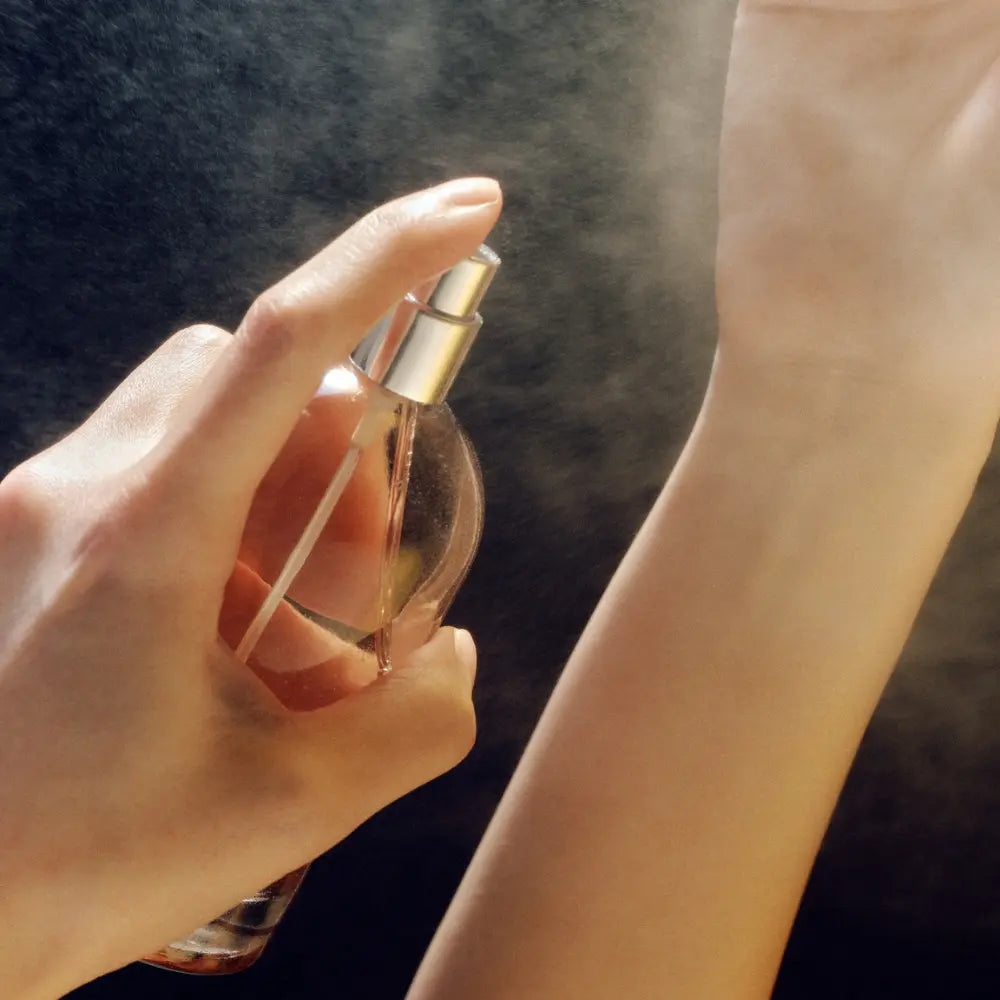
Is fragrance bad for your skin? Let's talk about why I made Salvida fragrance-free.
The short answer
For a lot of people, fragrance is the single most likely thing in their skincare to cause a problem. It is one of the most common causes of allergic contact dermatitis, sitting just behind nickel in most patch-test clinical results. Fragrance molecules are small enough to slip through the skin barrier, where they can act as ‘haptens’, latch onto your skin’s own proteins and set off an immune reaction. The catch is that this can build quietly over years before your skin suddenly decides it has had enough. If your skin is already sensitive or eczema-prone, the barrier is more compromised to begin with, so the risk goes up. And ‘natural’ fragrance is not a free pass. Some of the most common triggers come from essential oils. Sorry to disappoint. It is exactly why I built Salvida around a simple no fragrance (this includes synthetic and natural fragrances like essential oils), no nasties approach. If you want the full picture, read on.
Why I’m writing this
I’m Jacqui. I founded Salvida, an Aussie skincare brand for sensitive and eczema-prone skin, and I've experienced severe eczema both first hand as well as being an 'eczema-mum' (which is hundred times harder if I'm honest with you). When I was first trying to calm my daughter's skin in Singapore, I did what most of us do. I read the front of the bottle. ‘Gentle’. ‘For sensitive skin’. ‘Natural botanicals’. What I didn’t do at the start was turn the bottle over and read the actual ingredient list, because nobody had taught me how. And the thing that kept coming up, over and over, once I learnt to look, was fragrance (sometimes written as 'parfum').
Fragrance is the one ingredient I get asked about more than almost any other. People want to know if it really matters, or if leaving it out is just marketing. So this is the article I wish someone had handed me years ago. It picks up where Sensitive Skin and Eczema: Common Irritants and How to Build a Skin-Friendly Routine leaves off, and it pairs nicely with What Causes Eczema Flare-Ups: The 10 Triggers I Wish I’d Known About Sooner.
What ‘fragrance’ actually means on a label
Here is the part that surprised me most. When you see ‘fragrance’ or ‘parfum’ on an ingredient list, that single word can stand in for dozens, sometimes hundreds, of separate chemicals. Fragrance blends have historically been protected as trade secrets, so a brand can list the whole scent as one word and never tell you what is inside it.
That means two products can both say ‘fragrance’ and contain completely different things. One might be a light synthetic blend. Another might be loaded with known sensitisers. You, the person with reactive skin, have no way to tell them apart from the label alone. Everything hides behind one simple word.
This is the bit that bothered me. If you are trying to work out what is setting your skin off, a mystery word doing the work of a hundred ingredients is the opposite of helpful. It is the reason fragrance is so hard to pin down as a trigger, and the reason I think the safest position for sensitive skin is to skip it entirely rather than play detective.
What the research actually says about fragrance and your skin
This is not just a vibe. The dermatology research on fragrance is genuinely deep, because fragrance allergy is so common that patch-test clinics screen for it as standard. When a skin specialist patch tests you, one of the things they tape to your back is something called the ‘fragrance mix’, a small panel of the eight most common fragrance chemicals (things like cinnamal, eugenol, geraniol and oakmoss) all tested together. It is the standard way clinics check whether fragrance is the thing setting your skin off.
A few things the evidence shows clearly:
- Fragrance is one of the most common contact allergens. In most baseline patch-test series, the fragrance mix is one of the top reactions after nickel. A 2024 systematic review in Contact Dermatitis found about 7.8% of European patients tested for dermatitis reacted to it. That is roughly one in thirteen, and it climbs higher again in people who already have sensitive or eczema-prone skin.
- It works by sensitisation. A 2025 narrative review on perfumes and human health describes how small fragrance molecules penetrate the skin barrier, bind to your skin’s proteins and are then flagged by your immune cells. On the next exposure, memory cells kick off the reaction we see as dermatitis.
- Sensitive skin is more exposed. The large EDEN Fragrance Study in the European general population found that self-reported sensitive skin was associated both with using more scented products and with testing positive for fragrance allergy.
The pattern that worries me most is the slow one. You can use a fragranced product for years with no obvious issue while the sensitisation quietly builds, and then one day your skin reacts and keeps reacting. By that point the barrier is already irritated, which makes everything else (weather, detergents, stress) hit harder too. If you want the fuller picture of what else stacks up, I went through it in What Causes Eczema Flare-Ups.
It is not only what your skin touches
Most of this article is about fragrance landing on your skin, because that is where the clearest research sits. But fragrance does not stay politely on the surface, and two other routes are worth knowing about.
The first is what you breathe in. Fragranced products release volatile compounds into the air around you. In repeated national surveys led by the environmental scientist Anne Steinemann, around a third of people reported health problems such as headaches, migraines, blocked sinuses or breathing difficulty when exposed to fragranced products, and the rate was higher again for people with asthma. So the scent that fills the bathroom when you open a bottle is not nothing.
The second is what ends up inside you. To make a scent last, fragrances often rely on carrier ingredients like phthalates (diethyl phthalate is the common one). Biomonitoring studies have shown these can be absorbed through the skin and inhaled, then turn up in urine within hours of using a scented product, and some phthalates are considered possible endocrine disruptors. I want to be careful here, because the science is still developing and none of this means a single spritz will harm you. But it is a fair reason to be choosy about something you put on, and breathe in, every single day.
It is also a reminder that skin never really works in isolation. When the barrier is irritated, the ripples can reach further than the surface, including your gut. I went down that rabbit hole in The Reverse Gut-Skin Axis: How Your Skin Affects Your Microbiome.
‘But it’s natural’. Why essential oils are not a safe shortcut
This is the myth I most want to bust, because it is everywhere. ‘Fragranced with pure essential oils’ sounds like the gentle option. Often it is not.
Here is the science, and it is genuinely fascinating, and a little alarming. Two of the most common natural fragrance components are limonene (the citrus note) and linalool (found in lavender, among others). In their fresh, pure form they are fairly weak sensitisers. The problem is what happens when they meet air. Through a process called autoxidation, they slowly turn into compounds called hydroperoxides, and those hydroperoxides are far more potent triggers. DermNet’s review on limonene and linalool notes that roughly one in ten people investigated for contact dermatitis react to these oxidised forms.
So the lavender oil that smelled lovely and gentle when the bottle was new becomes more of a problem the longer it sits open on your shelf. The European Commission’s expert advice on perfume allergies explains the same mechanism. This is not anti-nature scaremongering. It is just chemistry doing what chemistry does.
Regulators have noticed. The EU is expanding its list of fragrance allergens that must be declared on labels from 26 individual ingredients to more than 80, and plenty of the new additions are natural ones like linalyl acetate, pinenes and rose ketones. ‘Natural’ and ‘gentle’ are not the same word, and they never were.
Unscented and fragrance-free are not the same thing
If you take one practical thing from this article, make it this one, because it trips up almost everyone.
‘Fragrance-free’ should mean no fragrance materials have been added to make the product smell a certain way. ‘Unscented’ means something quite different. An unscented product can still contain fragrance chemicals, used specifically to mask or cancel out the natural smell of the other ingredients so the finished product smells of nothing. In other words, ‘unscented’ can mean there is masking fragrance in there doing a job. For reactive skin, that masking fragrance is the same potential trigger as any other.
This is why the American Academy of Dermatology points people with eczema and sensitive skin towards ‘fragrance-free’ rather than ‘unscented’. Even then, labels are not perfect, and one analysis found that a surprising share of moisturisers marketed as fragrance-free still contained at least one potential fragrance ingredient. So the label is a starting point, not the finish line. The ingredient list is where the truth lives.
Worth knowing too: in Australia ‘fragrance-free’ is not a legally defined term. There is no rule that forces it to mean what you would assume, and an ingredient with a scent can legally appear in a ‘fragrance-free’ product if it is there to do another job, like masking a raw-material odour, rather than to perfume it. That is precisely why I read the full ingredient list rather than trusting the front of the pack.
| Label | What it usually means | Safe bet for sensitive skin? |
|---|---|---|
| Fragrance-free | No fragrance added to scent the product | Better choice, but still check the INCI list |
| Unscented | May contain masking fragrance to neutralise odour | Not reliable, treat with caution |
| Naturally fragranced | Scented with essential oils or botanical extracts | Still a fragrance, can still sensitise |
| Parfum / fragrance | An undisclosed blend of scent chemicals | The one to avoid if you react |
A quick honesty check on any product that calls itself gentle. Turn it over. If ‘fragrance’, ‘parfum’ or a string of those allergen names is on the list, the front of the bottle and the back of the bottle are telling you two different stories. I went deep on the other ingredients worth scanning for in Sensitive Skin and Eczema: Common Irritants, and on the fragranced products hiding around your home (laundry liquid, fabric softener, surface sprays) in Hidden Household Irritants That Trigger Eczema Flare-Ups at Home.
A note for the mini-me’s
If you are doing this for a child, fragrance matters even more. Children’s skin is thinner, their barrier is still developing and the research shows fragrances (linalool, limonene and Balsam of Peru in particular) are among the most common contact allergens found in kids. Here in Australia, ASCIA recommends people with eczema use non-fragranced moisturiser and steer clear of perfumes and fragranced products as part of everyday management.
The good news is that a fragrance-free routine is genuinely simpler for a busy household, not harder. One wash, one moisturiser, no decoding a different scent in every product. Boring and routine is exactly what reactive skin likes.
Why I made Salvida fragrance-free
When I formulated Salvida, leaving fragrance out was one of the first decisions I made, and it was not a hard one. I could not see the point of adding the single most common cosmetic allergen to products designed for the people most likely to react to it.
So the whole line is genuinely fragrance-free. Every Day Everywhere (a gentle face and body wash) does the daily cleansing without stripping. Bodyguard (the lighter daily moisturiser) handles everyday hydration. And Barrier NPR+ (a zinc-rich balm) is the one I reach for when skin is hardest to manage. No fragrance, no essential oils, no masking scent. They are also steroid-free, clinically and dermatologist tested and made here in Australia.
A product that smells of nothing much is doing its job. That lovely, perfumey smell you get from a lot of skincare is, for sensitive skin, often the exact thing causing the trouble.
Further reading (the guides that helped me figure this out)
One quick disclaimer before I send you off to the source material. I’m an eczema mum who runs a skincare brand, not a doctor or a scientist. I have done my best to read the research carefully and link it here so you can check it for yourself, but none of this is medical advice. If your skin is really struggling, please see your GP or a dermatologist.
- DermNet: Fragrance allergy. A clear, clinical overview of how fragrance allergy presents and what to avoid.
- DermNet: Contact allergy to hydroperoxides of limonene and linalool. The deep dive on why oxidised essential oils become stronger triggers.
- ASCIA: Allergic Contact Dermatitis. The Australian peak body on contact allergy, including fragrance and perfumes.
- European Commission: How fragrance substances become skin allergens. Plain-language expert explanation of the sensitisation mechanism.
- Contact Dermatitis (2024): systematic review of contact sensitisation to Fragrance Mix I and II. The peer-reviewed prevalence data.
- The EDEN Fragrance Study. Large general-population research linking scented product use, sensitive skin and fragrance allergy.
- Steinemann: health and societal effects from fragranced consumer products. The national-survey research on headaches, asthma and what we breathe in.
What I’d read next
- Sensitive Skin and Eczema: Common Irritants and How to Build a Skin-Friendly Routine. The natural next step once you have ruled out fragrance.
- Hidden Household Irritants That Trigger Eczema Flare-Ups at Home. The fragranced products lurking in your laundry and cleaning cupboard.
- What Causes Eczema Flare-Ups: The 10 Triggers I Wish I’d Known About Sooner. The full picture of what stacks up alongside fragrance.
- The Reverse Gut-Skin Axis: How Your Skin Affects Your Microbiome. Why barrier damage does not stay skin-deep and can ripple through to your gut.
One last thing
If you have been using fragranced products and your skin has been a bit dramatic, please do not beat yourself up. Almost nobody is taught to read the back of the bottle, and the front of the bottle is designed to reassure you. Working it out is the win, not a failing.
You do not have to overhaul everything overnight. Start with the products that stay on your skin longest (your moisturiser, then your wash), switch those to genuinely fragrance-free, and give your skin a few weeks. Most of what works for reactive skin is boring and patient, and that is fine.
I made Salvida so that I had products I could trust to use on my own family, and leaving fragrance out was non-negotiable from day one. If barrier-first, fragrance-free, steroid-free Aussie skincare is what you are after, I would love you to try the range. If you have a question this article didn’t answer, reach out. I read every email and DM.
Jacqui
Shop Every Day Everywhere | Shop Bodyguard | Shop Barrier NPR+ | Email me
FAQs
Read more
Putting zinc oxide on your face overnight, the trend some people call ‘face basting’, means applying a thick layer of a zinc-rich product before bed so it sits on the skin all night. The reason it ...
Topical steroid withdrawal explained, with gentle, supportive tips to help care for your skin during TSW and the healing process.