
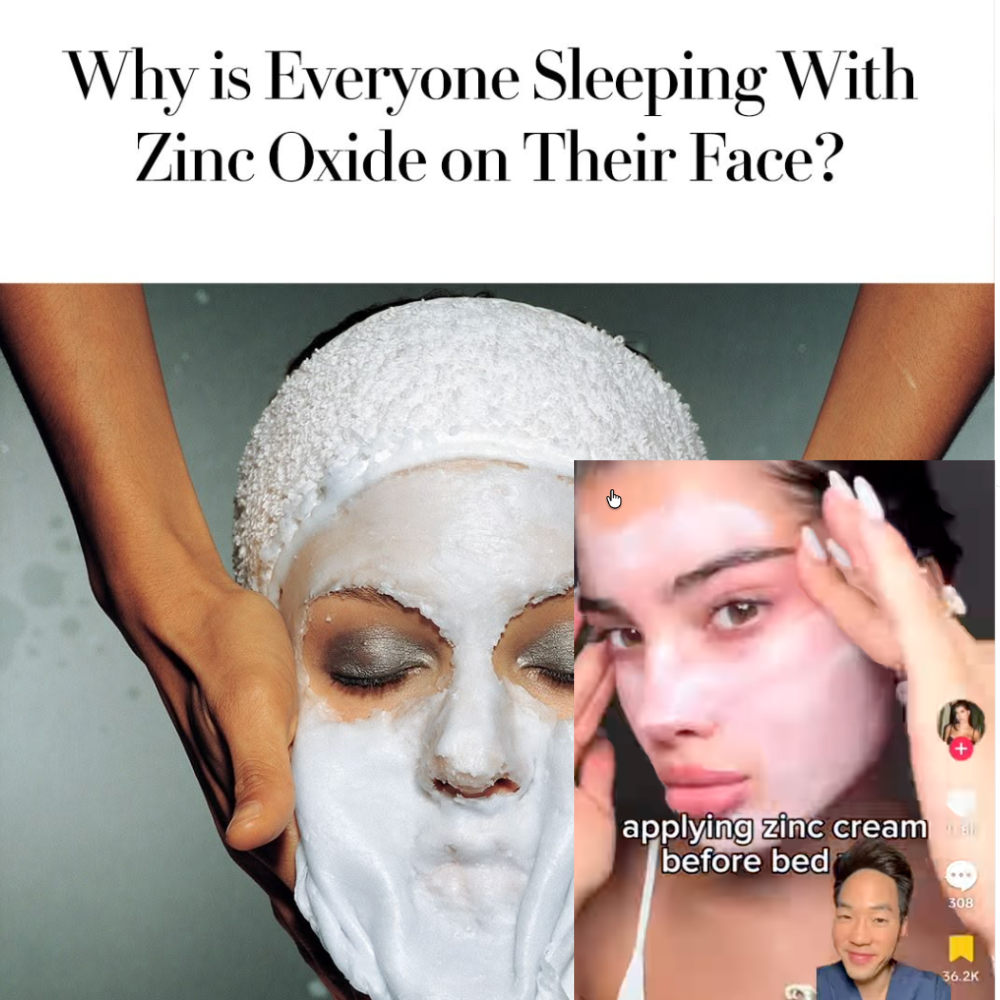
Zinc Oxide on Your Face Overnight: The Viral Trend That’s Actually Onto Something
Putting zinc oxide on your face overnight, the trend some people call ‘face basting’, means applying a thick layer of a zinc-rich product before bed so it sits on the skin all night. The reason it works for a lot of people is simple. Zinc oxide is a powerhouse mineral that works hard and fast to calm sensitive or reactive skin and applying it on thick forms a barrier that slows water loss from your skin. Zinc and your skin’s night-time renewal mode work together, and that’s why people are seeing a real morning glow up.
Why I’m writing this
I’m Jacqui. I founded Salvida, an Aussie skincare brand for sensitive skin. It grew out of years of my own reactive, easily-irritated skin and watching my daughter go through her own eczema battles, so when a skincare trend goes properly viral (and for once i'm all for it!), I can’t help but share it.
I get it. I understand it. And it’s why we formulated our hero product, Barrier NPR+ with 15% zinc. The promise is that you slather on a thick zinc layer, go to sleep and wake up with calmer, more radiant skin. So let me skin nerd out for you. This one is worth the hype, for almost everyone, not just people with reactive skin.
Zinc is genuinely powerful. It’s just that the version of the trend doing the rounds (reaching for the nappy rash tube) isn’t the version that I’d recommend.
Why everyone’s suddenly sleeping in zinc
The trend kicked off where most of them do now, on TikTok, with before-and-after videos of people layering a thick white zinc cream over their whole face before bed. Vogue covered it and the searches went up from there. What people are actually chasing is pretty consistent. They want skin that feels less tight and irritated, fewer rough patches, less redness and, honestly, a true overnight glow up.
A lot of the trend leans on nappy rash creams, because they’re cheap, they’re already in the house and zinc oxide is the hero ingredient. I get it. It’s convenient and nappy cream is zinc-rich, seem's like a win yeah? Ummmm... no. A product made to sit on a baby’s bottom under a nappy is built for a completely different job. You need a product with the same star ingredient, but a very different supporting cast. That’s the bit the trend skips over, and it’s the bit that matters most, whatever your skin type. I’ll come back to the purpose-made barrier balm I formulated for exactly this, because there’s a smarter way to do the same thing.
So I want to separate the two ideas here. The thinking behind the trend is sound. The execution is where I’d be careful.
What zinc actually does for your skin
Let’s start with the ingredient itself, because zinc deserves its moment. And when I talk about zinc I mean non-nano zinc. Why non-nano? Because it both rubs in clear, and sits on top of the skin rather than sinking in. Two things happen when it’s used in this way.
First, it acts as a gentle physical layer. That layer slows down how much water evaporates off the surface of your skin, something dermatology calls transepidermal water loss, or TEWL. Less water escaping means skin that holds onto its own hydration better, which is why people wake up feeling softer and less tight. If the words humectant, emollient and occlusive are new to you, I broke the whole system down in Hydration and Skin Health, and zinc oxide belongs firmly in the occlusive camp.
Second, zinc helps soothe the look of irritated, red and bumpy skin and supports the skin barrier. That surface-level calming is the thing you feel most. It’s the same reason zinc has been a quiet favourite for problem skin (think eczema, acne and a whole host of barrier dysfunction conditions) for decades. Worn as a thick layer overnight, that occlusive seal and it's antimicrobial properties also keep pillow bacteria and sweat from settling into the skin while you sleep, which is part of why blemish-prone skin often looks clearer and more even after a few nights. That’s the beauty of zinc. It’s not a one-trick pony. It works across dry, compromised, sensitive, blemish-prone and just plain tired skin, which is exactly why this trend has taken off so far beyond the world of reactive skin.
Why night-time is when zinc earns its keep
Here’s the part the trend gets genuinely right. Night-time is the smart time to do this.
Your skin loses the most water while you sleep. TEWL peaks overnight, which is exactly when a thin, dehydrated barrier is most exposed. For drier or more compromised skin it can be worse again. Research into how skin behaves at night has found that a healthy barrier tightens up to hold water in, but a weakened barrier can do the opposite and loosen, so it leaks more moisture at precisely the wrong time.
Laying a zinc-rich occlusive over the top before bed is a direct answer to that problem. It slows the overnight water loss and keeps the surface comfortable through the night.
Sleep and skin: the loop that compounds
This is my favourite part, because it’s where one small habit quietly stacks up, and fast!
When you sleep, your skin works overtime. During deep sleep your body releases growth hormone, which drives the natural cell turnover and barrier renewal that happens while you’re sleeping. Cortisol, your main stress hormone, also drops overnight, and since stress and cortisol are so tangled up with sensitive and reactive skin, that drop matters too.
The smarter way to do the trend
So I’m sold on the why. Zinc, overnight, for almost any skin type. It’s an ace idea. Where I part ways with the trend is the what.
A nappy rash cream is formulated for a baby’s bottom, not an adult’s face. It can be heavy, sometimes fragranced, and it often carries ingredients your facial skin doesn’t want night after night. It also leaves you with that thick white cast that’s fine under a nappy and a lot less fine on your face (or pillowcase!). This is exactly the kind of thing I flagged in Sensitive Skin and Eczema, where the wrong ‘gentle’ product quietly becomes the trigger.
I formulated Barrier NPR+ (a zinc-rich balm) for this exact moment, well before the trend existed. It’s a multitasking barrier balm, the purpose-made alternative to the nappy cream people are reaching for. Here’s why it’s the one I’d actually use.
It’s built on 15% non-nano zinc oxide, the same amount as the world’s leading zinc nappy cream, so you don’t lose any of the potency. The difference is the non-nano zinc rubs in clear, no thick white mask, so you can wear it on your face and actually go to bed looking like a person. Alongside the zinc, other ingredients like colloidal oatmeal, sweet almond oil and ceramides work hard to nourish, protect and restore the barrier. It’s 98% natural, fragrance-free and steroid-free, with a short, transparent ingredient list, and it’s clinically and dermatologist tested for the most sensitive and vulnerable skin.

Barrier NPR+ vs products commonly used in the overnight zinc trend
The differences are easiest to see side by side.
| Salvida vs Alternative Zinc Based Products | Zinc Oxide | Flagged (nasty) Ingredients | FF* | CO* | Made and Tested for Sensitive Facial Skin |
|---|---|---|---|---|---|
| Barrier NPR+ (Salvida) | 15%, non-nano, rubs in clear | None, fragrance-free | Yes | Yes | Yes, clinically and dermatologist tested |
| Product A | 15.25%, leaves a white cast | Added fragrance, benzyl benzoate and benzyl cinnamate (fragrance allergens), BHA, lanolin | No | No | No, made for nappy rash |
| Product B | 22%, thick white paste | Fragrance, lanolin, cod liver oil | No | No | No, made for nappy rash |
| Product C | None, 23% petrolatum (greasy, not white) | Lanolin alcohol, petrolatum and mineral oil | Yes | No | General-purpose ointment |
| Product D | None, pro-vitamin B5 base (greasy, not white) | Lanolin, lanolin alcohol | Yes | No | No, made for nappy rash |
* FF - Fragrance Free; CO - Colloidal Oatmeal (calms the itch)
The takeaway is simple. Some of these have the zinc but pile on fragrance, nasties and a white cast. Some are gentle but skip the zinc entirely. Barrier NPR+ keeps the zinc strength, drops the fragrance and the white cast.
In other words, you can absolutely try this viral trend at home. I’d just try it with something formulated for your face.
My Salvida night time routine
Here’s the simple version I’d actually do, three steps and easy as.
| Step | Product | What it’s doing |
|---|---|---|
| 1. Cleanse | Every Day, Everywhere (a gentle face and body wash) | Lifts off the day without stripping the skin |
| 2. Hydrate | A thin layer of Bodyguard (the lighter daily moisturiser) | Puts water and barrier support into the skin first |
| 3. Seal | A thick layer of Barrier NPR+ (a zinc-rich balm) | The hero zinc layer that locks it all in overnight |
Just remember the golden rule, water-based products go on before oil-based ones. So the lighter, more hydrating Bodyguard goes on first to give the skin something to hold, then the thick zinc balm goes over the top to seal it in. Putting the occlusive on last is what makes the whole thing work.
That thick zinc layer is the hero step, the one that lines up with the viral trend, just done on skin-friendly terms. The good news is the routine is gentle enough to do every night if your skin likes it. The zinc balm is the heavy seal, so at a minimum I’d reach for it a few nights a week when your skin is dry, tight or heading into a rough patch. On calmer nights you can keep the full three steps or drop back to just the wash and a light layer of Bodyguard. There’s no wrong way to do it. If you want to actually see what’s working for you, the Skin-ED Trigger Journal (Coming Soon) is a free 14-day tracker, and zinc nights are a good thing to log.
Further reading (the guides that helped me figure this out)
- Sleeping with zinc oxide on your face, Vogue. A clear-eyed look at where the trend came from and what’s hype versus helpful.
- Nocturnal eczema: review of sleep and circadian rhythms, Journal of Allergy and Clinical Immunology. The research on why the barrier and the itch behave differently at night.
- Sleep and eczema, National Eczema Association. Practical, evidence-based tips for getting more rest when your skin won’t let you.
- Helping kids with eczema sleep, Eczema Association of Australasia. The Aussie peak body on bedrooms, bedding and the night-time itch, written for parents.
- Zinc Therapy in Dermatology: A Review, Dermatology Research and Practice. The deeper dive into how zinc is used across skin, if you want the science.
What I’d read next
- Hydration and Skin Health: Why Drinking Water Isn’t Enough. The full humectant, emollient and occlusive story, so the zinc step makes even more sense.
- Glimmers, Stress and Sensitive Skin: Why Small Moments Matter for Eczema. The sleep, stress and cortisol piece of the puzzle.
- Sensitive Skin and Eczema: Common Irritants and How to Build a Skin-Friendly Routine. How to tell whether a ‘gentle’ product is actually working for you.
- Topical Steroid Withdrawal (TSW): How to Soothe and Support Your Skin. For the most reactive skin, and why I built a zinc balm with it in mind.
One last thing
If you’re reading this in the middle of a run of bad nights, the idea of one more step before bed might feel like a lot. That’s fair. But this is one of the rare bits of advice where the boring routine and the viral trend actually agree, and it’s genuinely easy to do. A thin hydrating layer, a thick zinc seal, lights out. Be patient with your skin and kind to yourself, because better nights tend to build slowly, not overnight.
I made Salvida so that I had products I could trust to use on my own family, and this trend is a nice reminder that the right ingredient in the wrong formula still isn’t the right product. If barrier-first, fragrance-free, steroid-free Aussie skincare is what you’re after, whatever your skin type, Barrier NPR+ and Bodyguard are the two I’d start with. And if you have a question this article didn’t answer, reach out. I read every email and DM.
Jacqui
Shop Barrier NPR+ | Shop Bodyguard | Download the Trigger Journal (Coming Soon) | Email me
FAQs
Read more
Most people drink aloe vera juice for digestive issues and hydration, but there are so many more benefits. The clear inner gel is water-dense, naturally low in sugar and carries minerals like calci...
For a lot of people, fragrance is the single most likely thing in their skincare to cause a problem.