Psoriasis: the symptoms, the causes and the medical and natural ways to calm it
The short answer
Psoriasis is a chronic, immune-mediated skin condition where skin cells are made far too fast and pile up into thick, well-defined plaques with silvery scale, most often on the elbows, knees, scalp and lower back. The main symptoms are those raised, scaly plaques and an itch that can also burn or sting. The cause is an overactive immune signal, not poor hygiene or anything you did. It’s often confused with eczema, which is more of a barrier problem, so it’s worth getting a proper diagnosis, and I’ve given the differences their own section below. Psoriasis is a medical condition, so your first step is professional advice from a GP or dermatologist. Alongside whatever they recommend, gentle everyday care does a lot of the day-to-day work: consistent moisturising, a stronger skin microbiome, sensible sunlight, an omega-3-rich diet and managing stress. The research is clearest of all on one thing: daily moisturising with the right ingredients is the foundation. This article focuses on that complementary, everyday side. If you want the full picture, read on.

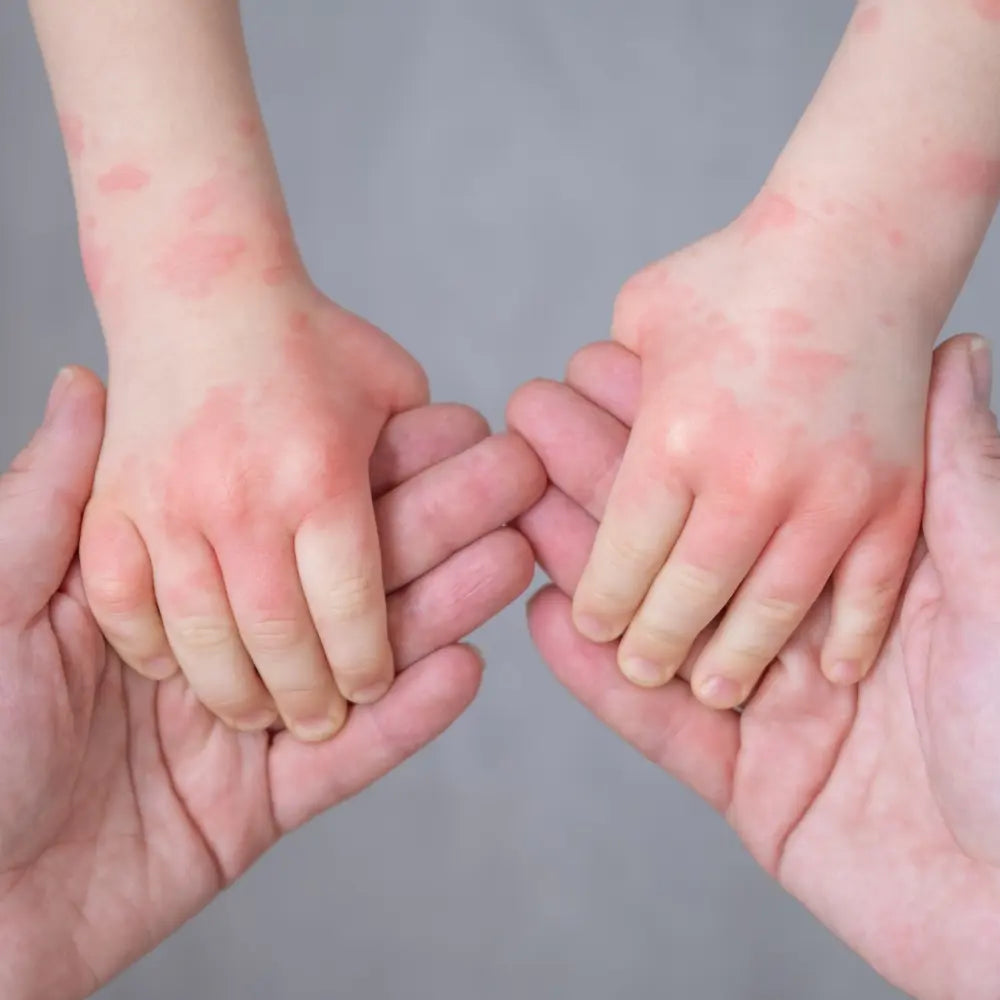
Photo submitted by Celia during the Home Tester Club consumer study, taken before she started using the Salvida range.
“The barrier was the best, it help soothe the itchy skin, still have to use steroid on the active psoriasis area but the barrier cream helps to reduce the frequency significantly.” Celia, Home Tester Club tester
Salvida is a small range of barrier-first products, not a treatment or cure. Skin is influenced by lots of things, like diet, stress, the products you use and your own immune system, so everyone’s results will look a little different!
Why I’m writing this
I’m Jacqui. I run Salvida, an Aussie skincare brand for sensitive and reactive skin. It grew out of my own reactive skin and watching my daughter go through a severe stretch of eczema overseas, so eczema is my home turf. But over the last year my inbox has filled up with a different question, from people with psoriasis, not eczema, who feel a bit forgotten.
A lot of them tell me the same two things. First, they were never quite sure how psoriasis differs from eczema in the first place. Second, they’ve tried the medical route and, for whatever reason, it hasn’t been the whole answer for them, so they want to understand what else is out there. I take both of those seriously. So this is a plain English, evidence backed look at what psoriasis actually is, how it differs from eczema, and the full menu of options, medical and natural, that can help calm it.
What psoriasis actually is
Psoriasis is a chronic, immune-mediated condition. Put simply, your immune system gets its wires crossed and tells your skin cells to grow far too fast. A normal skin cell takes around a month to travel to the surface and shed. In psoriasis that can happen in days, so cells stack up before they’re ready to fall away. That build-up is what you see and feel as raised plaques, silvery scale and flaking, most often on the elbows, knees, scalp and lower back.
Plaque psoriasis is the most common form by a long way, making up around 80 to 90% of cases, and psoriasis affects an estimated 2 to 3% of people. It’s more than skin-deep too. It’s linked to psoriatic arthritis and other health conditions, and around three in four people say it affects their daily life, confidence or mood. So if it’s wearing you down, that’s the condition talking, not you being dramatic.
How psoriasis differs from eczema: symptoms, causes and treatment
Here’s the part people find genuinely useful, because once you can see the difference, everything else makes more sense. The two get muddled constantly, but they come from different places. Eczema is driven mostly by a leaky, under-performing skin barrier and an over-reactive response to triggers. Psoriasis is driven by that internal immune signal speeding up cell turnover. Same organ, different mechanism, which is why the symptoms, the causes and the way each is treated all differ up close.
| Feature | Psoriasis | Eczema |
|---|---|---|
| The cause | Immune-mediated, skin cells made too fast | Barrier dysfunction plus an over-reactive immune response |
| Symptoms: how it looks | Thick, well-defined plaques with silvery-white scale | Red, dry, sometimes weepy patches with less defined edges |
| Symptoms: where it shows up | Elbows, knees, scalp, lower back, nails | Inside elbows, behind knees, hands, face |
| Symptoms: the itch | Present, and can also burn or sting | Intense itch is the hallmark |
| Typical onset | Often 15 to 35, with a second peak later in life | Often early childhood |
| Common company | Psoriatic arthritis, nail changes | Asthma, hay fever, food allergies |
| How it’s treated | Guided by a GP or dermatologist, alongside everyday barrier care, sunlight and lifestyle support | Rich emollients and trigger avoidance, with prescribed creams for flares |
The practical takeaway is that the everyday skincare toolkit overlaps a lot, gentle cleansing and rich moisturising help both, but the cause and the treatment differ, so getting a proper diagnosis is worth it before you settle on a plan. The rest of this article stays focused on psoriasis.
Everyday care that runs alongside your medical treatment
I want to be balanced here, because managing psoriasis isn’t an either/or. Psoriasis is a medical condition, so a GP or dermatologist should be your starting point, and any treatment they prescribe is theirs to guide. I won’t wade into the detail of that here, and I’d never counter the science. I also know some people haven’t found the medical route to be the whole answer, or haven’t loved the trade-offs, and if that’s you, that’s a fair thing to feel and you’re not alone.
What I can help with is the everyday, complementary side that runs in parallel with whatever your doctor recommends: barrier care, the skin microbiome, diet, sunlight and stress. This side has more evidence behind it than most people realise, and it’s low-risk. Best of all, it isn’t a rival to medical care, it supports it. Emollients, for example, have been shown to support how well medical treatments work, so good everyday skincare used alongside your prescribed plan tends to beat either on its own. That parallel, complementary role is exactly what I make Salvida products for. Wherever you land, if your psoriasis is spreading fast, cracking painfully, looking infected or moving into your joints, that’s the moment to get professional advice.
The natural foundations, and what the evidence says
Let me go through the natural side properly, because this is the part I’m asked about most, and each piece has peer-reviewed research behind it.
Your skin barrier is the foundation. Researchers have measured that psoriatic plaques lose water faster (higher transepidermal water loss, or TEWL) and hold less moisture than healthy skin. That leaky, dry combination drives the tightness, itch and flaking. A rich, lipid-based barrier balm slows that water loss and softens scale so it sheds more comfortably, which is exactly why emollients get called the cornerstone of everyday psoriasis care in the research literature. One nuance worth knowing: richer, lipid-based formulas tend to bring water loss down, while thin, watery ones can nudge it up, so heavier usually wins on scaly skin. If humectant, emollient and occlusive are new words, I broke the whole system down in Hydration and Skin Health.
Your microbiome matters more than we used to think. People with psoriasis tend to show shifts in their skin and gut microbes, a state called dysbiosis, and there’s a two-way line of communication between the gut and skin (the gut-skin axis) that appears to feed into the inflammatory signalling psoriasis runs on. Prebiotics and probiotics are being studied as a result, with early reviews calling the direction promising but not yet settled. The low-risk, sensible move is to protect your skin’s microbiome rather than strip it, so skip harsh, high-pH, fragranced washes and choose microbiome-friendly products. Good naturopaths are worth their weight in gold, if you have struggled to get on top of your symptoms it may be worth exploring homeopathic alternatives.
Diet and gut health can play a supporting role. The clearest example is omega-3. A systematic review of 18 randomised controlled trials found fish oil on its own didn’t move psoriasis severity scores much, but combined with conventional treatment it did help. That’s a useful, honest picture: not a cure, but a reasonable complementary layer. If you want to explore the gut and diet side further, my Best Diet for Eczema guide carries across, and it’s wise to see a GP or dietitian before cutting out food groups or loading up on supplements.
Sunlight is a genuinely evidence-backed one. Natural sunlight has real immunomodulating effects in psoriasis, and studies on outdoor heliotherapy have reported significant clearing of symptoms in a large majority of people over a few weeks. This is the same principle behind medically supervised UVB phototherapy. The Aussie caveat is a big one though: our UV is harsh, and sunburn is itself a psoriasis trigger, not to mention the skin cancer risk. So think short, sensible exposure and talk to your doctor about proper phototherapy rather than sunbaking.
Stress is not just in your head. Psychological stress is a recognised trigger, reported in the majority of flare cases, and researchers have found people with psoriasis can have a dysregulated stress-hormone (HPA axis) response, with altered cortisol linked to more severe disease. Managing your nervous system is a legitimate, no-cost part of the plan, which is the whole reason I wrote Glimmers, Stress and Sensitive Skin.
The ingredients I lean on, and why
When it comes to what you actually put on the skin, a handful of ingredients have real evidence for easing psoriasis symptoms. These are the ones I formulated around, and I’ll stick to what they do for the dryness, itch and scale rather than making any claim about the condition itself.
Colloidal oatmeal is my workhorse. In one study, 60 women with psoriasis and sensitive skin used a colloidal oatmeal lotion for four weeks and reported significant improvement in dryness, scaling, roughness and itch, with itch and flaking improving by around 45%. It’s clinically supported to help calm itch and the look of redness, thanks to compounds called avenanthramides.
Zinc is a long-standing barrier-supporting ingredient, and topical zinc has been studied in psoriasis with encouraging results on plaque severity. In my formulating I use it to support the skin barrier and slow water loss.

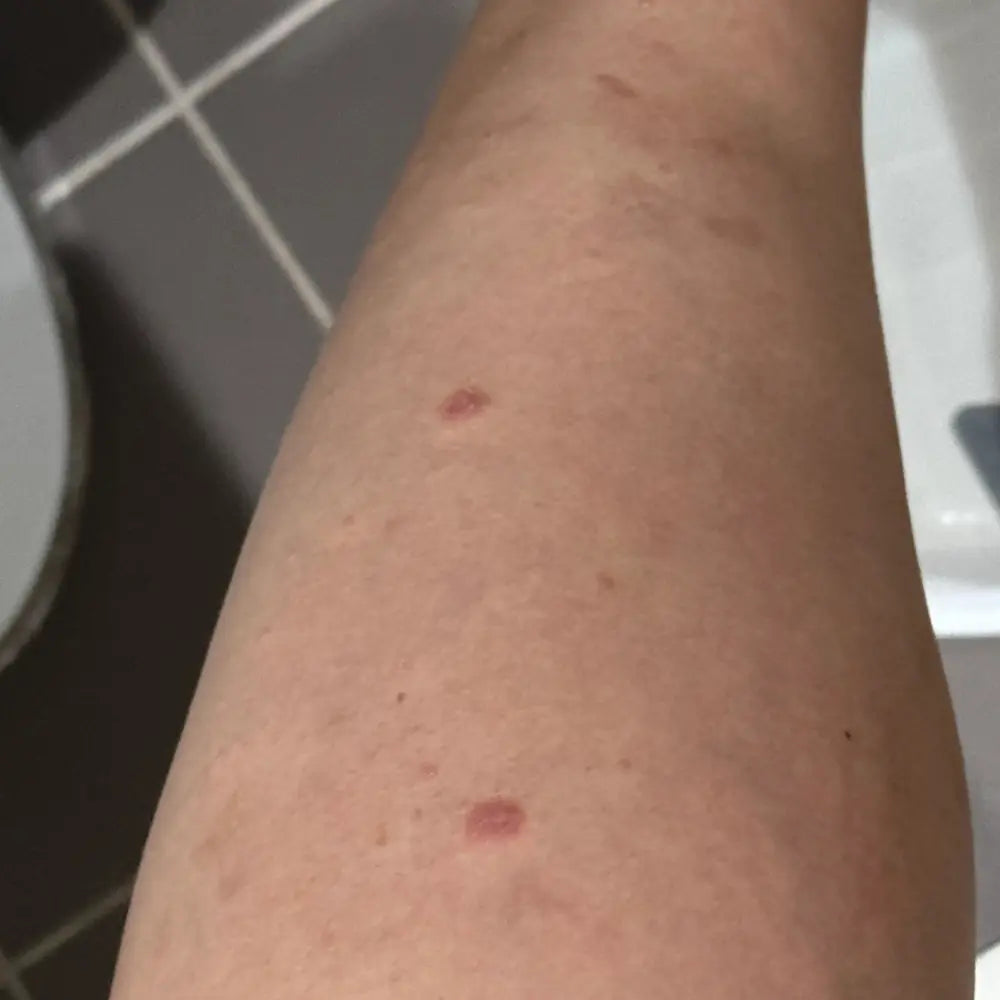
Photo submitted by Erin during the Home Tester Club consumer study.
“This is a great product for anyone suffering from dry & sensitive skin, including eczema & psoriasis. It is gentle & nourishing for extremely dry skin and areas that have flared up.” Erin, Home Tester Club tester
Salvida is a small range of barrier-first products, not a treatment or cure. Skin is influenced by lots of things, like diet, stress, the products you use and your own immune system, so everyone’s results will look a little different!
Ceramides are the lipids that make up the skin barrier’s mortar. In a randomised controlled trial, a moisturiser built around ceramides and linoleic acid, used alongside standard care, outperformed the control on skin-severity scores. A barrier-supporting moisturiser isn’t a nice-to-have here, it’s part of the picture.
Aloe vera deserves its reputation. In a randomised trial, topical aloe vera gel improved plaque severity comparably to a low-strength steroid cream over eight weeks. It’s a hydrating, soothing ingredient, and one I use for exactly that reason.
Sweet almond oil and prebiotics round it out. Sweet almond oil is an emollient that helps seal in moisture, and prebiotic ingredients like alpha-glucan oligosaccharide help nourish the skin microbiome, which supports the barrier.
Here’s how those map onto my own range, so you can picture a simple routine. The order matters, so remember the golden rule, water-based products go on before oil-based ones.
| Step | What I reach for | What it’s doing |
|---|---|---|
| 1. Cleanse | Every Day, Everywhere (a gentle face and body wash) | A fragrance-free, sulphate-free, low-pH wash that lifts the day off without stripping the barrier |
| 2. Hydrate | Bodyguard (the lighter daily moisturiser) | A biome-boosting lotion with prebiotics to hydrate and support the skin microbiome |
| 3. Seal | Barrier NPR+ (a zinc-rich balm) | A richer zinc, colloidal oatmeal and ceramide balm that seals in moisture, slows water loss and helps calm the itch on dry, scaly patches |
None of these are medicines, and none of them switch off the immune signal that drives psoriasis. What they’re good at is making the skin more comfortable, less itchy, tight and flaky, whether you’re using them alongside a prescribed treatment or as part of a gentler, natural-leaning routine. If you’d like the two barrier steps together, the Rebuild Your Barrier Bundle pairs Barrier NPR+ and Bodyguard. And whatever you try, patch test on your inner arm for a few days first, because psoriasis skin can be reactive.
Further reading (the research and resources that helped me figure this out)
- Psoriasis, DermNet. A thorough, plain-English reference on the types, triggers and treatments.
- Psoriasis: an update on topical and systemic therapies, Australian Prescriber. A clear overview of the medical options, written for Australian clinicians.
- Study of Skin Barrier Function in Psoriasis: The Impact of Emollients (Life, 2021). The research measuring higher water loss and lower hydration in psoriatic skin.
- Efficacy of fish oil in the management of psoriasis: a systematic review of 18 RCTs (Nutrition Reviews). The honest picture on omega-3, alone and as an add-on.
- Topical aloe vera vs 0.1% triamcinolone in mild-to-moderate plaque psoriasis (JEADV, 2010). The randomised trial on aloe vera and plaque severity.
- Vitamin D, sunshine and UVB phototherapy in psoriasis (2021 review). On the role of sunlight and vitamin D.
- Psychological stress and salivary cortisol in plaque psoriasis (2021). The research on stress, cortisol and flares.
What I’d read next
- Eczema vs Dermatitis: What’s the Difference (and How to Manage Both). If you’re still working out which condition you’re dealing with.
- Hydration and Skin Health: Why Drinking Water Isn’t Enough. The humectant, emollient and occlusive system that barrier care rests on.
- Glimmers, Stress and Sensitive Skin: Why Small Moments Matter. The stress-skin loop, which matters as much for psoriasis as it does for eczema.
- Best Diet for Eczema: Top Foods to Eat (and Avoid) for Friendly Skin. For more on the gut-skin axis and eating for calmer skin.
One last thing
If you’ve felt a bit forgotten in the psoriasis conversation, or let down by an approach that was sold to you as the only one, I get it. There isn’t a single right way to manage psoriasis. Start with professional medical advice, then build the everyday, complementary side around it: barrier care, a stronger microbiome, sensible sunlight, good food and a calmer nervous system. That everyday layer is where Salvida fits, running quietly in parallel with whatever your doctor recommends. The best plan usually combines both and fits your life.
I made Salvida so that I had products I could trust to use on my own family, fragrance-free, steroid-free, clinically tested and gentle enough for the most reactive skin. That’s the same reason they’re an everyday layer I’d happily reach for around psoriasis, whichever path you’re on. Be patient with your skin and kind to yourself. If you have a question this article didn’t answer, reach out. I read every email and DM.
Jacqui
Shop Barrier NPR+ | Shop Bodyguard | Shop the Rebuild Your Barrier Bundle | Email me