
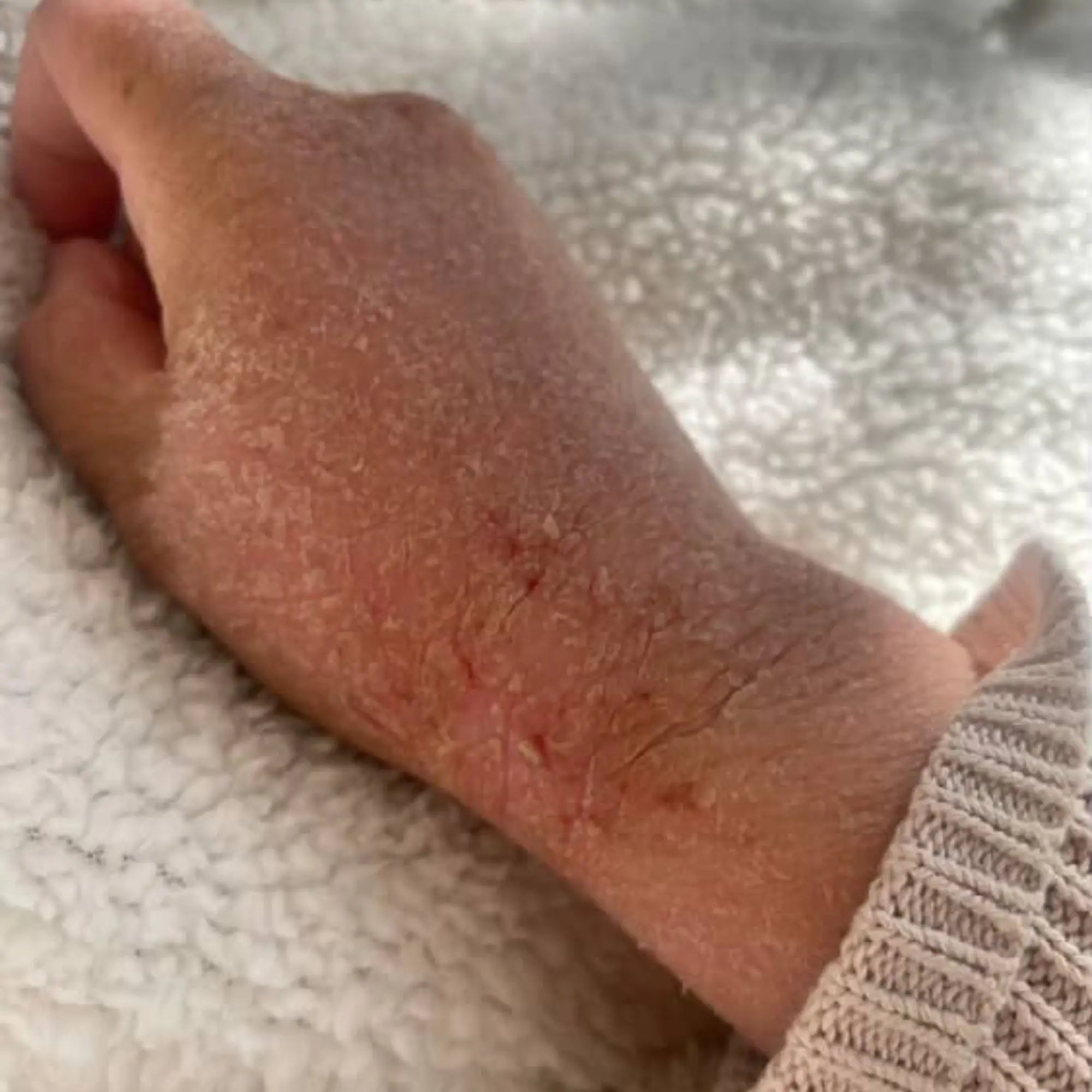
Eczema or Topical Steroid Withdrawal? How to Tell the Difference and Find Real Support
The short answer
If your skin is red, burning, itchy and flaring, it is completely reasonable to ask whether you are looking at eczema or topical steroid withdrawal (TSW). The honest answer is that the two overlap a lot, and you often cannot tell them apart from a photo alone. The biggest clue is usually your history, not your symptoms: how long and how often topical steroids were used and whether things got dramatically worse after stopping. TSW is a recognised (though still under-acknowledged) reaction that can follow prolonged topical steroid use, and it needs proper support. Sorry to disappoint, there is no instant fix. But there is real help and this guide walks you through how to tell the difference and where to find care that takes you seriously. If you want the full picture, read on.
Why I’m writing this
I’m Jacqui. I run Salvida, an Aussie skincare brand for sensitive and eczema-prone skin, and I have my own eczema history plus years of watching my daughter go through severe eczema overseas. I am a skin nerd, not a doctor.
I hear from people in the middle of TSW almost every week and the same two things come up again and again. The first is confusion: ‘is this my eczema coming back, or is it something the steroids did?’ The second is frustration, because so many feel dismissed the moment they mention TSW to a professional. A lot of my customers going through it tell me their life feels ‘on hold’.
This article used to be two separate pieces on my blog. I have merged them because the question ‘is it eczema or TSW’ and the question ‘how do I get help’ are really the same conversation. Along the way I’ll point you to a few related reads, including How Topical Steroids Work (and Why They’re Recommended Short-Term) and Eczema vs Dermatitis: What’s the Difference (and How to Manage Both).
What topical steroid withdrawal actually is
Topical steroid withdrawal is a reaction that can occur after stopping topical corticosteroids following prolonged or frequent use. Topical steroids are commonly and appropriately prescribed to calm inflammatory skin conditions like eczema and dermatitis and for most people, used as directed and short-term, they do their job without drama.
For a smaller group, the picture changes. When topical steroids are used regularly over a long stretch, the skin can become accustomed to them, needing more to get the same result. When they are then withdrawn, some people experience a rebound: symptoms that feel far more intense than the original problem, sometimes spreading to skin that was never treated.
The peak international patient organisation, the International Topical Steroid Awareness Network (ITSAN), describes TSW as an ‘iatrogenic’ condition, meaning one caused inadvertently by a medical treatment. Importantly, not everyone who uses topical steroids develops it and it is still not clear why some people do and others never will.
To be clear, TSW is not some brand-new fad. People have been describing it, naming it and supporting each other through it for well over a decade and in that time the community, the understanding and the awareness around it have grown enormously. What has shifted more recently is the science. A set of diagnostic criteria for TSW has been formally proposed, and scientists at the United States National Institute of Allergy and Infectious Diseases (NIAID, part of the NIH) have gone further, describing TSW as biologically distinct from eczema and linked to an excess of a compound called NAD+ in the skin. So the ground is moving in the right direction: TSW is being defined, measured and taken more seriously, and more people find informed support every year.

Why eczema and TSW look so similar
Here is the frustrating part. Both eczema and TSW involve inflammation and a struggling skin barrier, so they share a long list of symptoms:
- Redness or a flushed look
- Burning or stinging
- Itching, sometimes relentless
- Dryness and flaking
- Heightened sensitivity to products, fabrics and temperature
- Disrupted sleep
When you are in the thick of it, staring at your own skin at 2am, this overlap is exactly why self-diagnosis is so hard and why online symptom-checking tends to ramp up anxiety rather than settle it. Eczema itself also shifts over time, with flare patterns changing alongside age, stress, weather and what you are exposed to. So ‘my skin is worse than it used to be’ does not automatically point to one answer over the other.

Where eczema and TSW tend to differ
No table can diagnose you and experiences vary widely. But there are patterns that TSW-aware clinicians and organisations like ITSAN and DermNet describe, and knowing them can help you have a more informed conversation with a professional.
| Feature | More typical of eczema | More often described in TSW |
|---|---|---|
| History | Long-standing, often since childhood, runs in families | Follows prolonged or frequent topical steroid use, with a clear change after stopping |
| Pattern of redness | In the usual spots (creases, hands, face) | Can spread well beyond treated areas. A ‘red sleeve’ on arms or legs that stops at the wrists and ankles, sparing palms and soles, is a classic description |
| Onset | Flares build with a known trigger | Burning and redness days to weeks after stopping steroids |
| Skin surface | Dry, itchy, sometimes weepy patches | Oozing then heavy flaking or ‘shedding’, skin that feels like plastic, ‘elephant wrinkles’ from thinning |
| The itch | Localised, surface itch | Often described as a deep, ‘bone-deep’ itch, with nerve sensations people call ‘zingers’ or ‘sparklers’ |
| Beyond the skin | Mostly skin-focused | Whole-body signs reported: altered temperature regulation, swollen lymph nodes, hair thinning, fatigue, insomnia |
This comparison is educational, not diagnostic. Only a qualified professional can assess your history and rule out other causes.
The single most useful clue is not on your skin at all, it is your story. How long were topical steroids used? How often? On which areas (the face, eyelids and genitals absorb more)? And crucially, when did things change? If you’d like to understand the medication side of this properly, my piece on How Topical Steroids Work (and Why They’re Recommended Short-Term) breaks it down without fear-mongering.
Why TSW can be so hard to get taken seriously
Let’s be straight about the elephant in the room. Topical steroid withdrawal is still an evolving and, in some circles, debated area of medicine. Awareness is growing but recognition is uneven. Some GPs and dermatologists know TSW well and support their patients through it. Others have never been taught it exists, and a few are openly sceptical.
It is worth holding two things at once here, because both are true. ITSAN and thousands of people with lived experience will tell you TSW is real, devastating and too often swept aside. At the same time, cautious clinical bodies like Eczema Support Australia point out that TSW appears to be rare, that it is most often reported after long-term, unsupervised use of potent steroids and that in many cases worsening skin after stopping is actually the underlying eczema returning. Both of those perspectives can be held with respect. What neither of them says is that your experience does not matter.
If you have felt dismissed, brushed off or made to feel like you imagined it, that is not a character flaw and it is not you being dramatic. It is the very real experience of living something that mainstream medicine has been slow to recognise, even though the patient community has understood it and supported each other through it for years. None of it is your fault. The goal is not to avoid doctors or to ‘win’ an argument with one. It is to find care that is informed, respectful and actually useful to you.
How to find help that takes TSW seriously
This is the part I most want you to have. Finding the right support can genuinely change how this feels.
Start with safety, not with stopping. If you are still using topical steroids, please do not go cold turkey on your own on the strength of a blog or a Facebook post (including this one). ITSAN is clear on this: stopping topical steroids abruptly when the adrenal glands are suppressed after long-term use can be dangerous. A doctor can check adrenal and cortisol function first, rule out skin infection (which can look similar and needs treating), and help you plan a considered step-down. Talk to your GP or dermatologist about a taper rather than a sudden stop.
Bring the evidence with you. One of the most practical things ITSAN offers is a Doctor’s Guide, written by TSW-aware doctors for exactly the situation where you feel unheard. Printing something credible and handing it over changes the tone of an appointment. You are no longer ‘the patient who read something online’, you are bringing peer-reviewed and clinician-authored material to the table.
Look for TSW-aware or integrative practitioners. You are allowed to book a consult specifically to discuss your steroid history and recovery and you are allowed to keep looking if the first person is not a fit. A dermatologist, GP or a good naturopath who understands the gut-skin connection can each be a useful part of the picture, working alongside your medical care rather than instead of it.
Lean on the community, especially your local one. The TSW community has grown enormously over the past decade and it is one of the best sources of both comfort and practical, on-the-ground knowledge. For Aussies, this is the bit I really want you to hear: look for moderated Australian TSW and eczema support communities on Facebook and Instagram. They are a genuine lifeline for not feeling so alone at 2am, and they are also where you will often find the names of local GPs, dermatologists and practitioners who actually understand TSW and take it seriously. Ask the group who they have seen in your state and what helped. Wider networks like ITSAN’s Facebook support group and crowdsourced resources like TSW Assist add the global research and product layer on top. Just remember that community advice is lived experience, not medical advice, so always check that any practitioner you see is appropriately qualified.
Know your Australian starting points. Here in Australia, your GP is your gateway to a dermatologist referral and to the tests worth doing before you change anything. Eczema Support Australia is a solid, level-headed home base for information, and ITSAN gives you the global research and community layer on top.
Seeking support does not mean you have done something wrong. It means you are not navigating this alone.
Gentle ways to support your skin day to day
While you sort out the right professional support, the daily goal is simple: reduce irritation and keep your skin as comfortable as you can while it works to regulate itself again. Honestly, this is less about doing more and more about doing less, consistently.
Simplify right down. When skin is this reactive, every extra product is another variable. Use a very gentle, soap-free wash and only when you need it if skin feels raw. Skip exfoliants, retinoids, acids and anything fragranced. My Sensitive Skin and Eczema: Common Irritants and How to Build a Skin-Friendly Routine guide is a good companion here.
Cool, not hot. Heat tends to intensify the burn. Cool compresses on angry patches, lukewarm showers rather than hot and go easy on heat packs.
Support the barrier, and patch test everything. Zinc, colloidal oatmeal and simple emollients are the kind of low-drama ingredients many people reach for but tolerance varies wildly during TSW and skin that accepted something last week can reject it this week. Patch test, always. That is the golden rule. I formulated Barrier NPR+ (a zinc-rich balm) with TSW-prone, reactive skin in mind: zinc, colloidal oatmeal, sweet almond oil and ceramides, no fragrance and no essential oils. When skin is calmer, Bodyguard (our daily moisturiser) is the one I reach for. You can read more about why I lean on zinc on my Zinc for TSW page.
A word on No Moisture Treatment (NMT). Some people come across NMT, an approach developed by Japanese dermatologist Dr Kenji Sato that involves significantly reducing moisturiser and fluid intake. Some report it helps, others find it unbearable, particularly during intense dryness. It is one of several personal choices, not the only path and ideally explored with professional guidance rather than alone.

Supporting the whole you, not just the skin
TSW is not only a skin event. It affects sleep, appetite, energy and mood and the isolation of it can be as heavy as the physical symptoms. Supporting your nervous system is not ‘extra’, it is foundational care.
Stress and skin are closely connected and chronic stress can influence inflammation and how comfortable your skin feels. Gentle, unglamorous things help: slow breathing, a bit of time outdoors, light movement, rest and leaning on the people around you. If you feel low, anxious or hopeless, please talk to someone, whether that is a GP, a counsellor or a trusted person in your life. This is a genuinely hard thing to go through and reaching for support is strength, not weakness.
Further reading (the resources that helped me understand this)
- What is TSW Syndrome? (ITSAN). The clearest plain-English explanation of what TSW is, its symptoms and its phases, from the peak awareness organisation.
- Coping with TSW (ITSAN). Practical, lived-experience coping strategies for the itch, the flares and everything in between.
- For Doctors and the TSW Doctor’s Guide (ITSAN). Clinician-authored material to bring to appointments if you are struggling to be heard.
- Topical Steroid Withdrawal Diagnostic Criteria Defined by NIH Researchers (NIAID). The recent research describing TSW as distinct from eczema.
- Topical Steroid Withdrawal (Red Skin Syndrome), StatPearls (NCBI/NIH). A peer-reviewed clinical overview.
- Topical Corticosteroid Withdrawal (DermNet). A well-regarded dermatology reference on stages, symptoms and risk factors.
- Topical Steroid Withdrawal, Understanding the Facts (Eczema Support Australia). The measured Australian view, and a good local starting point.
What I’d read next
- How Topical Steroids Work (and Why They’re Recommended Short-Term). The medication side, explained calmly, so you can make informed decisions with your doctor.
- Eczema vs Dermatitis: What’s the Difference (and How to Manage Both). Sorts out the vocabulary that gets used interchangeably and adds to the confusion.
- Glimmers, Stress and Sensitive Skin: Why Small Moments Matter for Eczema. For the nervous-system side of recovery, which matters more than people expect.
- Sensitive Skin and Eczema: Common Irritants and How to Build a Skin-Friendly Routine. How to strip a routine back to the essentials when skin is reactive.
One last thing
Topical steroid withdrawal can feel isolating, especially when progress is slow, the labels are contested and you are not sure who to trust. So let me say the plain things. You are not imagining it. You are not alone. And none of it is your fault. Healing is rarely a straight line, but a wobbly line is still a line, and it is still moving forward.
Be patient with your skin and kind to yourself. Find the professional who takes you seriously, lean on the community that gets it, and keep your daily care boring and consistent. I made Salvida so that I had products I could trust to use on my own family, and if barrier-first, fragrance-free, steroid-free, clinically tested Aussie skincare is what you are after, I’d love you to try Barrier NPR+ and Bodyguard. If you have a question this article didn’t answer, reach out. I read every email and DM.
Jacqui
Shop Barrier NPR+ | Shop Bodyguard | Zinc for TSW | Email me
FAQs
Read more

For a lot of people, fragrance is the single most likely thing in their skincare to cause a problem.
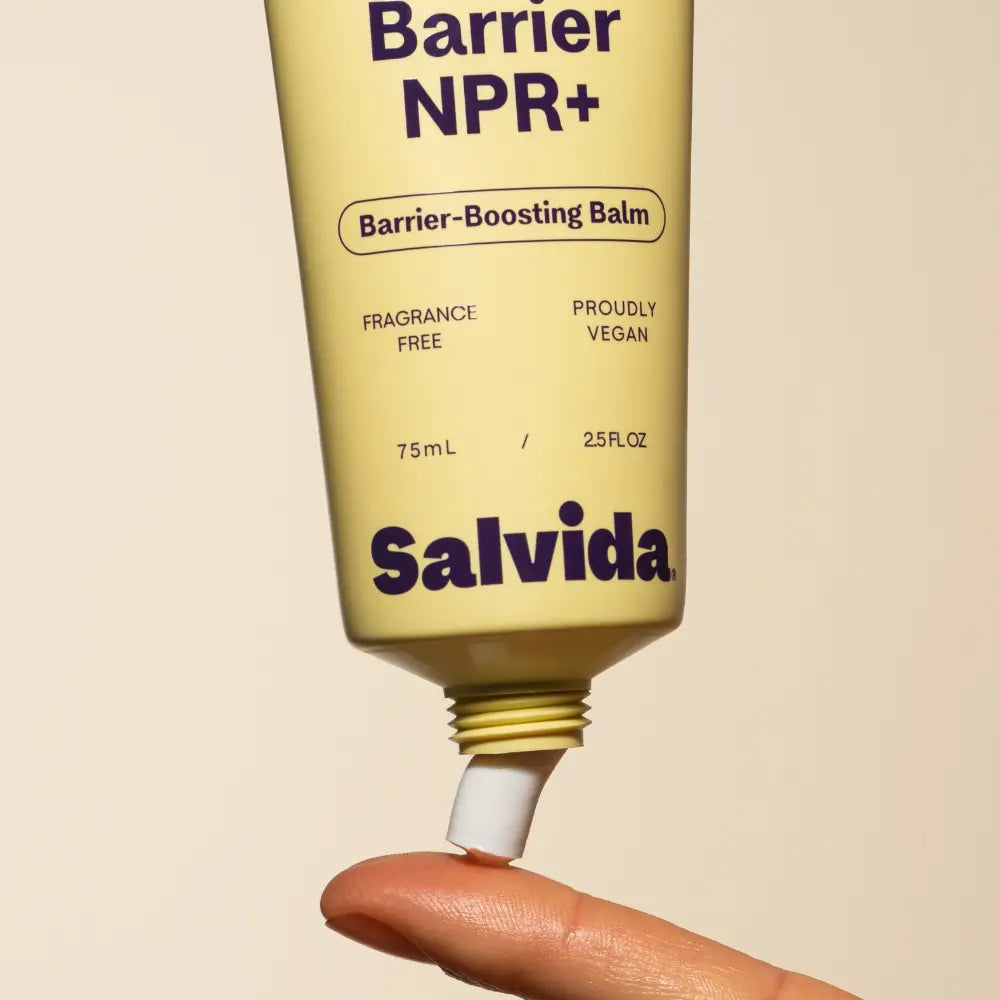
13 clever uses for a zinc and oatmeal barrier balm, from windburn and chafing to insect bites, chapped lips, cracked heels and more.